
MUNICH HIGHLIGHTS FAIR 2026: A DIALOGUE OF PAST AND PRESENT
MUNICH HIGHLIGHTS FAIR 2026: A DIALOGUE OF PAST AND PRESENT
For Munich Highlights 2026, Ralph Gierhards Antiques / Fine Art presents a selection shaped by the same principle that gives the fair its particular character: care. In the historic setting of the Munich Residenz, Munich Highlights has established itself as a boutique fair for collectors, connoisseurs and art professionals who value quality over volume. Its strength lies in the careful selection of objects, the personal expertise of its exhibitors, and the possibility of encountering works of art in an atmosphere that feels both intimate and exceptional.
This approach corresponds closely with the philosophy of Ralph Gierhards. The Düsseldorf gallery has cultivated a refined and personal eye for important works of art, furniture and decorative objects from the 16th to the early 20th century. Rather than presenting art as a sequence of categories, the gallery searches for objects that carry presence, craftsmanship, provenance and emotional resonance. Each piece is chosen for the clarity of its quality and for the conversation it can create with works from other periods and disciplines.
At this year’s fair, that conversation begins with animal sculpture. Ralph Gierhards presents a selection of works by Renée Sintenis, August Gaul and other internationally renowned animal sculptors of the early to mid-20th century. These bronzes speak with a quiet intensity. Sintenis’s antelope, conceived in 1954, captures the elegance and vulnerability of the animal in a gesture of inward movement. Gaul’s Hurrying Bear on Four Legs, created in 1914, offers another kind of vitality with its fully observed character. Together, such works reveal how animal sculpture became one of the most sensitive fields of modern artistic expression.
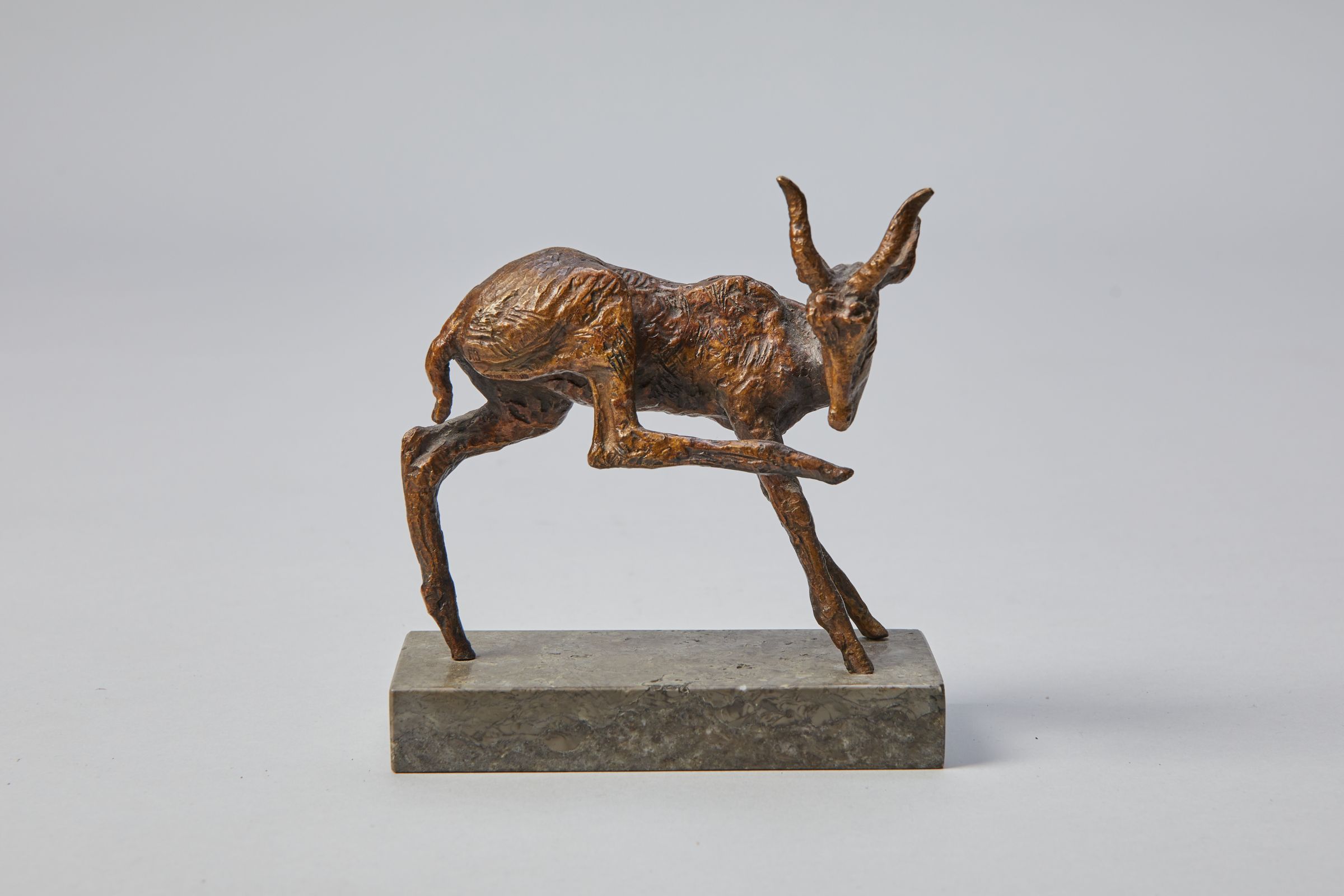 Renée Sintenis (1888 - 1965), “Antelope licking its right foot”, conceived 1954
Ralph Gierhards’ participation in Munich Highlights 2026 is therefore not only a presentation of individual works. It is an argument for selection itself. In a fair devoted to excellence, authenticity and encounter, the gallery contributes an exhibition shaped by long expertise, disciplined taste and a belief that the finest objects do not merely decorate a space. They define it.
This approach corresponds closely with the philosophy of Ralph Gierhards. The Düsseldorf gallery has cultivated a refined and personal eye for important works of art, furniture and decorative objects from the 16th to the early 20th century. Rather than presenting art as a sequence of categories, the gallery searches for objects that carry presence, craftsmanship, provenance and emotional resonance. Each piece is chosen for the clarity of its quality and for the conversation it can create with works from other periods and disciplines.
At this year’s fair, that conversation begins with animal sculpture. Ralph Gierhards presents a selection of works by Renée Sintenis, August Gaul and other internationally renowned animal sculptors of the early to mid-20th century. These bronzes speak with a quiet intensity. Sintenis’s antelope, conceived in 1954, captures the elegance and vulnerability of the animal in a gesture of inward movement. Gaul’s Hurrying Bear on Four Legs, created in 1914, offers another kind of vitality with its fully observed character. Together, such works reveal how animal sculpture became one of the most sensitive fields of modern artistic expression.
Renée Sintenis (1888 - 1965), “Antelope licking its right foot”, conceived 1954A second focus of the presentation lies in one of the gallery’s most distinctive areas of expertise, the 18th-century European gold boxes. These objects require a particular kind of connoisseurship, which we proudly carry at Ralph Gierhards Gallery. Their value is not only in precious material, but in proportion, enamel, construction, marks, attribution and the condition of surfaces made to be held closely in the hand. Among the Highlights is a rare blue enamelled and guilloché oval Hanau gold box, whose translucent midnight-blue enamel, and finely worked decorative structure demonstrate the refinement of 18th-century goldsmithing. For Ralph Gierhards, such pieces are not simply lavish objects. They are miniature architectures of taste, technique and social history.
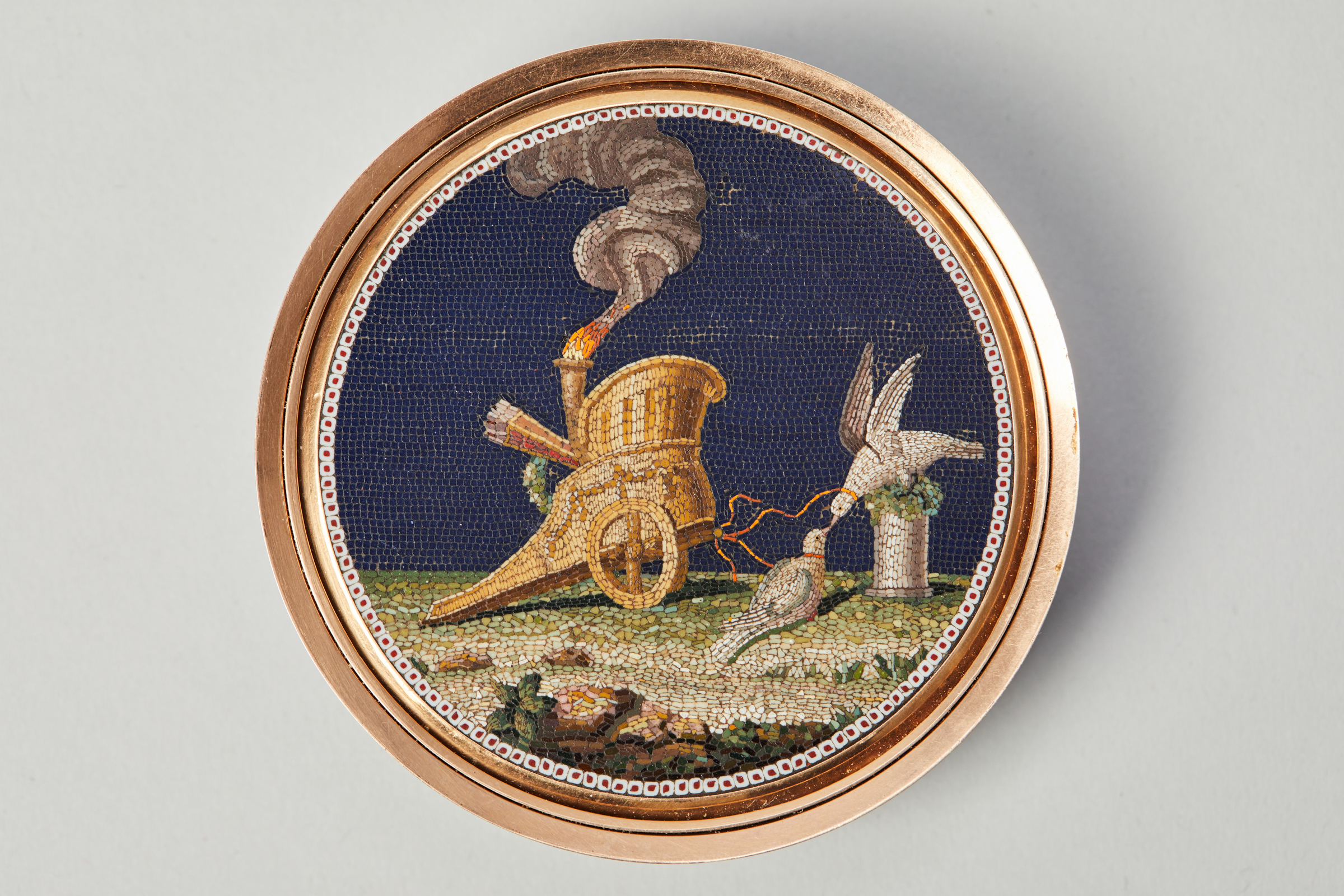
Alongside them, micromosaics from the first half of the 19th century continue the theme of minute precision. Like gold boxes, they reward slow looking. Their beauty lies in the relation between scale and ambition, with tiny fragments assembled into images of remarkable depth, colour and permanence. Within the setting of Munich Highlights, they form a natural counterpart to the gallery’s gold boxes, showing how small-format works can hold an extraordinary degree of artistry.For Munich Highlights 2026, Ralph Gierhards Antiques / Fine Art presents a selection shaped by the same principle that gives the fair its particular character: care. In the historic setting of the Munich Residenz, Munich Highlights has established itself as a boutique fair for collectors, connoisseurs and art professionals who value quality over volume. Its strength lies in the careful selection of objects, the personal expertise of its exhibitors, and the possibility of encountering works of art in an atmosphere that feels both intimate and exceptional.
This approach corresponds closely with the philosophy of Ralph Gierhards. The Düsseldorf gallery has cultivated a refined and personal eye for important works of art, furniture and decorative objects from the 16th to the early 20th century. Rather than presenting art as a sequence of categories, the gallery searches for objects that carry presence, craftsmanship, provenance and emotional resonance. Each piece is chosen for the clarity of its quality and for the conversation it can create with works from other periods and disciplines.
Alongside them, micromosaics from the first half of the 19th century continue the theme of minute precision. Like gold boxes, they reward slow looking. Their beauty lies in the relation between scale and ambition, with tiny fragments assembled into images of remarkable depth, colour and permanence. Within the setting of Munich Highlights, they form a natural counterpart to the gallery’s gold boxes, showing how small-format works can hold an extraordinary degree of artistry.For Munich Highlights 2026, Ralph Gierhards Antiques / Fine Art presents a selection shaped by the same principle that gives the fair its particular character: care. In the historic setting of the Munich Residenz, Munich Highlights has established itself as a boutique fair for collectors, connoisseurs and art professionals who value quality over volume. Its strength lies in the careful selection of objects, the personal expertise of its exhibitors, and the possibility of encountering works of art in an atmosphere that feels both intimate and exceptional.
This approach corresponds closely with the philosophy of Ralph Gierhards. The Düsseldorf gallery has cultivated a refined and personal eye for important works of art, furniture and decorative objects from the 16th to the early 20th century. Rather than presenting art as a sequence of categories, the gallery searches for objects that carry presence, craftsmanship, provenance and emotional resonance. Each piece is chosen for the clarity of its quality and for the conversation it can create with works from other periods and disciplines.
Workshop Giacomo Raffaelli (1753 - 1836), “Bonbonniere with Roman micromosaic”, ca. 1800
The exhibition is further enriched by 19th-century French and German paintings, as well as selected Old Master works. These paintings broaden the presentation without diluting it. They add historical depth and painterly atmosphere, allowing sculpture, decorative art and design to be seen not as isolated fields, but as parts of a continuous culture of collecting.
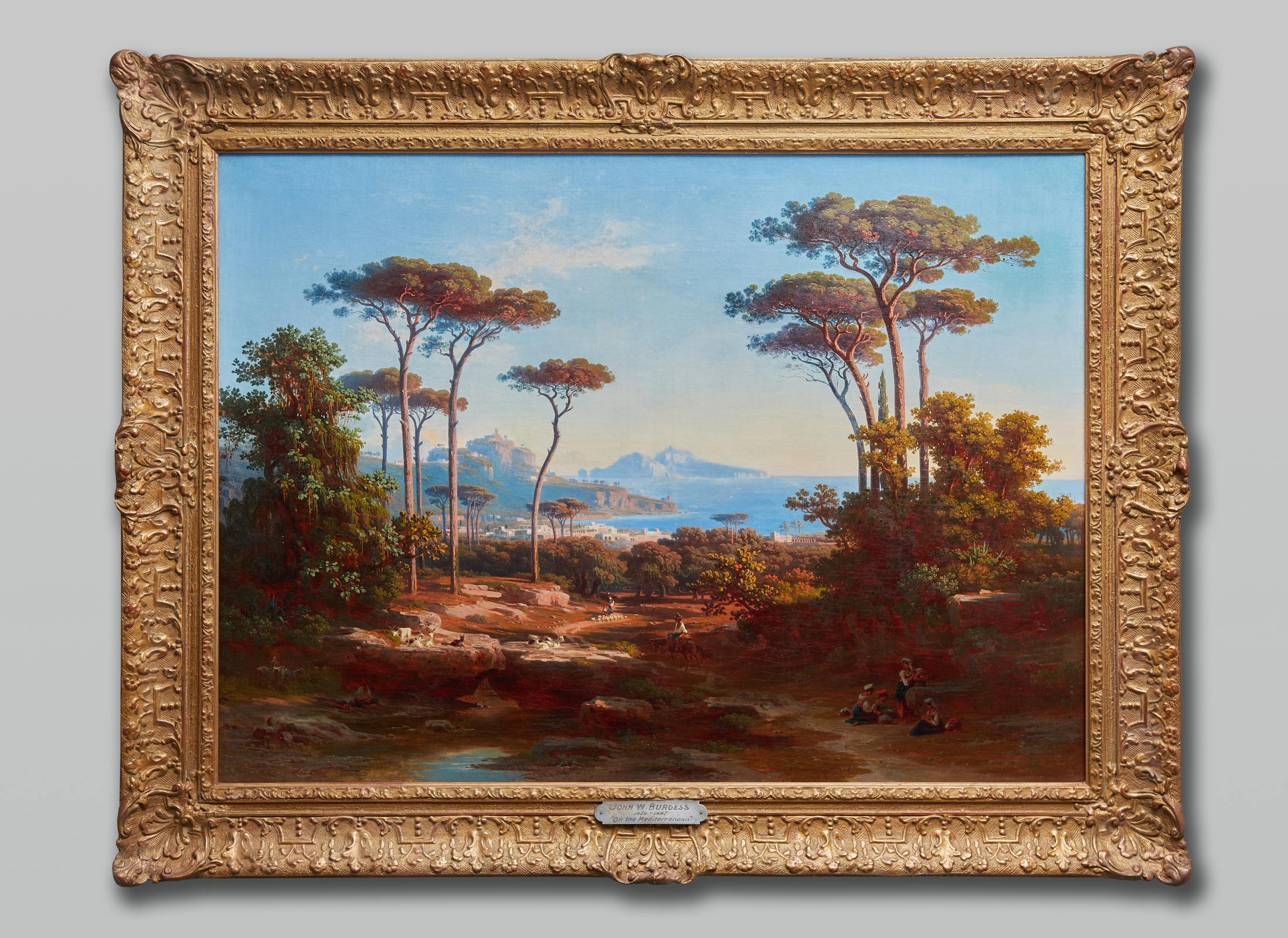
Johann J. Frey (1813 - 1865), “Atmospheric evening view from Massa Lubrense to Capri”, 1860
The Art Deco and design elements complete this sense of a lived and thoughtful interior. A pair of sheepskin-covered armchairs by the Danish designer Erling Torvits, circa 1950, introduces Scandinavian warmth and modern comfort, while a lambskin armchair by Mogens Lassen brings another note of sculptural softness. Nearby, an early scagliola panel, repurposed as a table on a modern base, creates a dialogue between historic craft and contemporary presentation. Its decorative surface and architectural presence embody exactly the kind of transformation that thoughtful collecting can make possible.
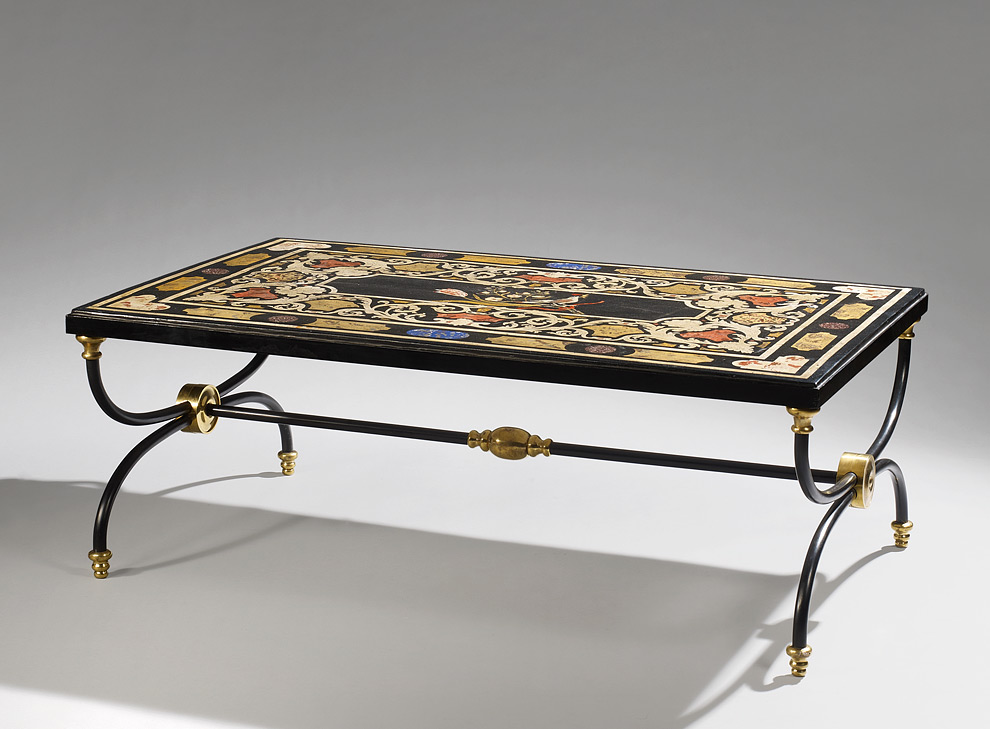
Italian Scagliola plate on a modern base, ca. 1750
Ralph Gierhards’ participation in Munich Highlights 2026 is therefore not only a presentation of individual works. It is an argument for selection itself. In a fair devoted to excellence, authenticity and encounter, the gallery contributes an exhibition shaped by long expertise, disciplined taste and a belief that the finest objects do not merely decorate a space. They define it.