
WHY ANIMAL SCULPTURE STILL SHAPES OUR SPACES
WHY ANIMAL SCULPTURE STILL SHAPES OUR SPACES
Animal sculptures possess a particular allure that speaks directly to us. In the 19th and 20th centuries especially, artists studied animal anatomy with extraordinary discipline, translating observation into bronze and stone with remarkable sensitivity. These works represent art at its most direct, form reimagining motion, material capturing instinct. Few artistic genres command such immediate presence or such lasting visual authority. Within this period, animal sculpture reached a level of autonomy and refinement that continues to define sculpture collecting today.
Animals have long served as vehicles for expressing human emotion and experience. From prehistoric cave paintings to medieval carvings, they have embodied power, grace, fear, loyalty, and freedom. Yet it was in the late 19th and early 20th centuries that the animal became an independent sculptural subject. No longer just a decorative accessory, it stood complete in itself, studied, simplified, and elevated through modern sculptural language. Let’s dive into the artists that glorified animal sculptures for us.
RENÉE SINTENIS
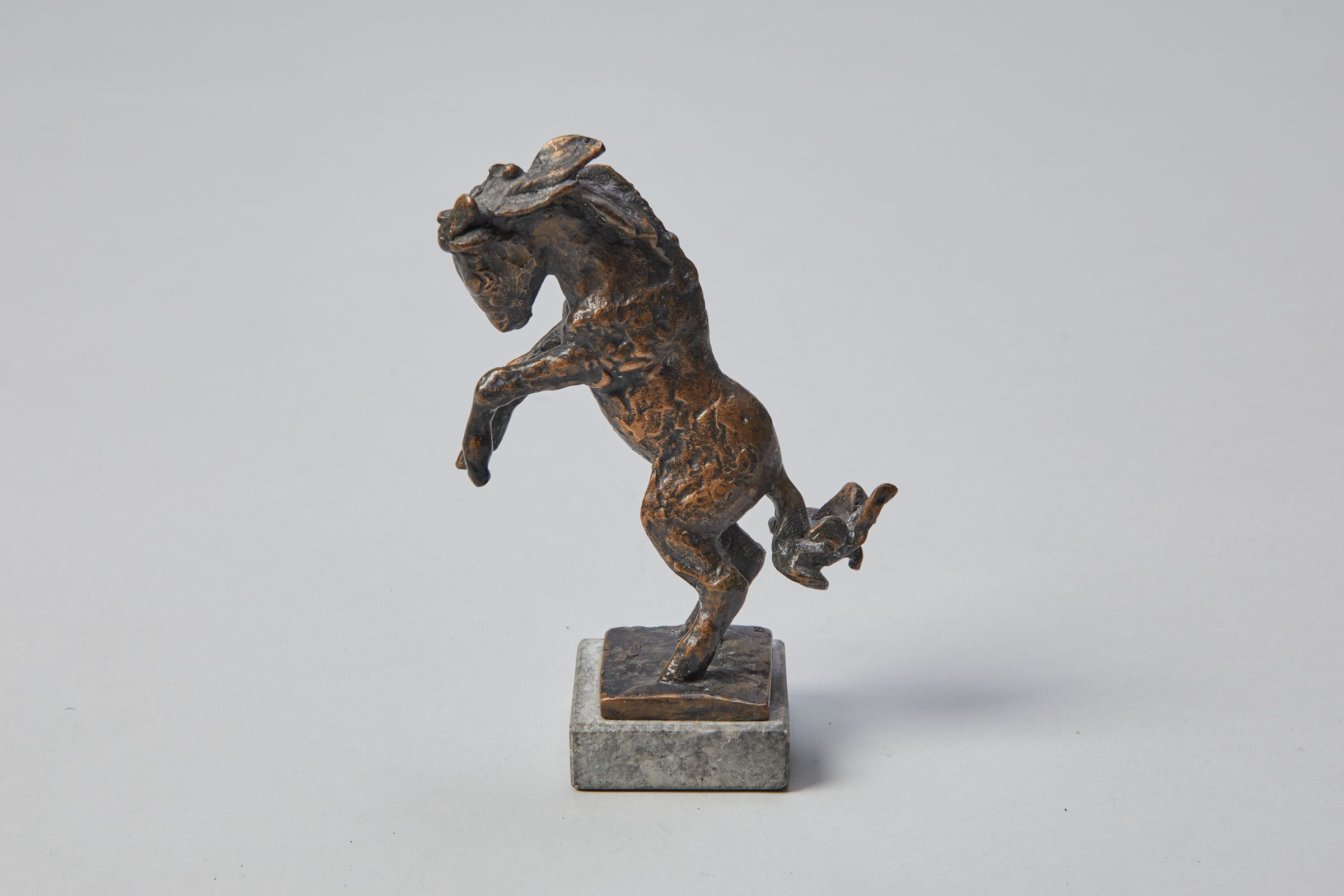
Renée Sintenis approached animals with intimacy and psychological nuance. Her sculptures often focus on domestic or smaller creatures, rendered with alertness and quiet dignity. Rather than monumental drama, she favored clarity of line and presence. Her animals feel alive not because of theatrical movement, but because of restraint. In an interior setting, a Sintenis sculpture introduces elegance and subtle character, making it particularly desirable within a refined animal sculptures collection.
AUGUST GAUL
August Gaul pursued balance and structural clarity. His animals are reduced to essential forms without losing natural truth. The calm stance of a deer or the poised stillness of a bird becomes an exploration of mass and proportion. Gaul’s contribution to bronze animal sculptures lies in this equilibrium between realism and abstraction. His works sit effortlessly in both classical and contemporary spaces, embodying strength through simplicity.
EMY ROEDER
Emy Roeder brought expressive intensity to her sculptural practice. Even in animal subjects, one senses an underlying emotional charge. Her forms are compact, concentrated, and powerful. Roeder’s work demonstrates how animal sculpture in the 20th century could bridge human and animal sensibilities, creating objects that feel psychologically resonant rather than merely decorative.
MAXIMILIAN FIOT
Maximilian Fiot remained closer to naturalistic observation, capturing movement and vitality with refined detail. His sculptures reveal deep anatomical understanding, particularly in equestrian and wildlife subjects. For collectors seeking bronze animal sculptures that combine elegance with realism, Fiot represents a strong and historically grounded choice.
GEORGES LUCIEN GUYOT
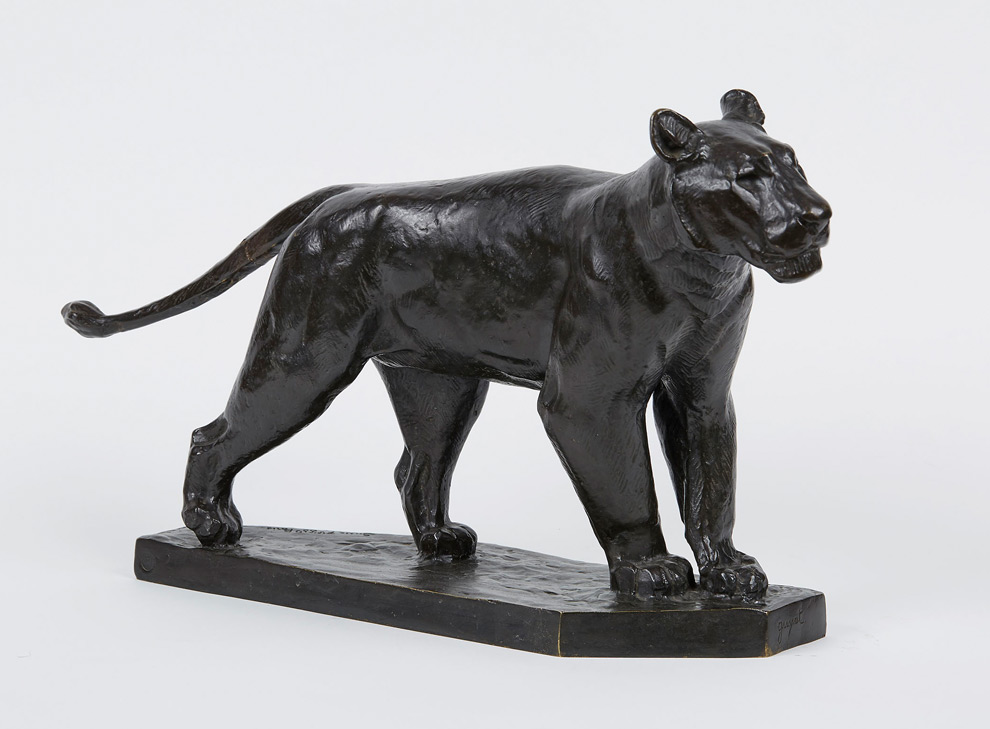
Georges Lucien Guyot’s animal sculptures reflect careful study and compositional awareness. His works often emphasize gesture and posture, allowing the animal’s stance to communicate character. They function beautifully in garden settings as well as interior environments, bridging sculpture and landscape with quiet authority.
EDOUARD-MARCEL SANDOZ
Sandoz introduced stylization and decorative rhythm into animal sculpture. While rooted in observation, his forms often embrace a modern sensibility, emphasizing contour and surface. His bronze animal sculptures appeal strongly to collectors who appreciate both sculptural innovation and historical continuity.
JOSEF PALLENBERG
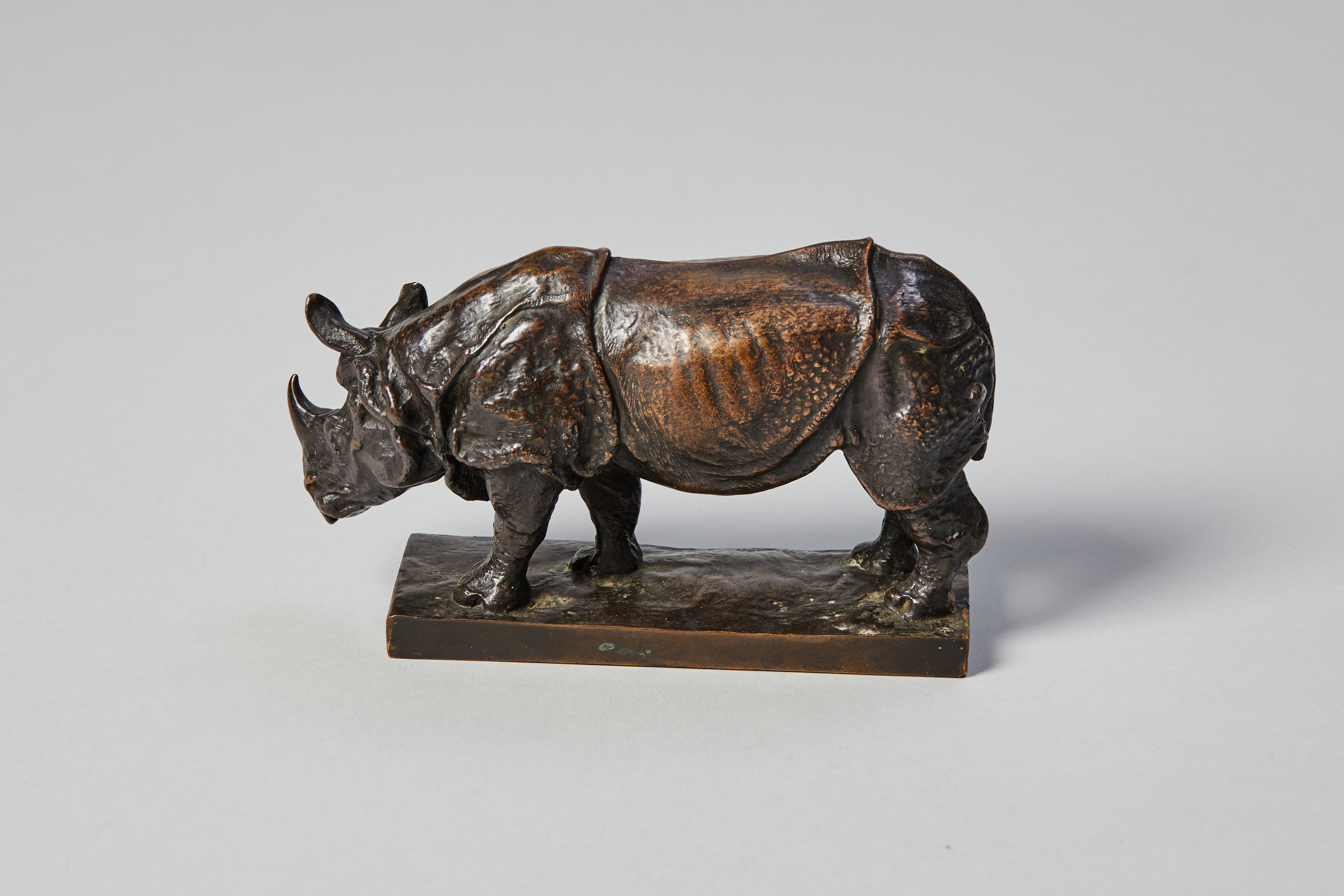
Josef Pallenberg’s dedication to anatomical accuracy and dynamic movement gave his works exceptional vitality. His studies of musculature and posture reveal an artist deeply engaged with zoological observation. These sculptures command attention without excess, making them powerful focal points in both traditional estates and modern architectural settings.
ROGER GODCHAUX
Roger Godchaux is particularly celebrated for his mastery in depicting animals in motion. His refined casting and sensitivity to proportion elevate his work within the tradition of French animalier sculpture. For collectors building a serious animal sculptures collection, Godchaux offers both technical excellence and historical significance.
FRANÇOIS POMPON
François Pompon “distilled” the animal form to its purest essence. His smooth, simplified surfaces and monumental calm transformed animal sculpture into something unmistakably modern. Pompon’s work demonstrates how reduction can intensify presence. A single sculpture can anchor an entire space through quiet strength alone.
The untamed beauty of a wild animal protecting its offspring once adorned parks and the grand halls of mansions, embodying continuity and power. Today, 19th and 20th century animal sculptures can be rediscovered with fresh appreciation. In a world dominated by abstraction and digital imagery, the sculpted animal reconnects us to instinct, physicality, and the continuity of life. These works bridge eras, from classical traditions to modernist refinement, while remaining deeply relevant.
Starting a focused collection of animal sculptures from this period is not simply about browsing animal sculptures for sale. It is about engaging with a defined artistic lineage. These works combine technical mastery, psychological subtlety, and sculptural independence. Whether placed in a garden, a library, or a contemporary living room, they introduce character and historical depth. Collecting 19th and 20th century animal sculpture is therefore more than an aesthetic decision. It is an investment in a tradition that unites craftsmanship, symbolism, and enduring presence, a tradition that continues to enrich both spaces and serious collectors alike.
Animals have long served as vehicles for expressing human emotion and experience. From prehistoric cave paintings to medieval carvings, they have embodied power, grace, fear, loyalty, and freedom. Yet it was in the late 19th and early 20th centuries that the animal became an independent sculptural subject. No longer just a decorative accessory, it stood complete in itself, studied, simplified, and elevated through modern sculptural language. Let’s dive into the artists that glorified animal sculptures for us.
RENÉE SINTENIS
Renée Sintenis approached animals with intimacy and psychological nuance. Her sculptures often focus on domestic or smaller creatures, rendered with alertness and quiet dignity. Rather than monumental drama, she favored clarity of line and presence. Her animals feel alive not because of theatrical movement, but because of restraint. In an interior setting, a Sintenis sculpture introduces elegance and subtle character, making it particularly desirable within a refined animal sculptures collection.
Renée Sintenis „Pony rearing“
AUGUST GAUL
August Gaul pursued balance and structural clarity. His animals are reduced to essential forms without losing natural truth. The calm stance of a deer or the poised stillness of a bird becomes an exploration of mass and proportion. Gaul’s contribution to bronze animal sculptures lies in this equilibrium between realism and abstraction. His works sit effortlessly in both classical and contemporary spaces, embodying strength through simplicity.
EMY ROEDER
Emy Roeder brought expressive intensity to her sculptural practice. Even in animal subjects, one senses an underlying emotional charge. Her forms are compact, concentrated, and powerful. Roeder’s work demonstrates how animal sculpture in the 20th century could bridge human and animal sensibilities, creating objects that feel psychologically resonant rather than merely decorative.
MAXIMILIAN FIOT
Maximilian Fiot remained closer to naturalistic observation, capturing movement and vitality with refined detail. His sculptures reveal deep anatomical understanding, particularly in equestrian and wildlife subjects. For collectors seeking bronze animal sculptures that combine elegance with realism, Fiot represents a strong and historically grounded choice.
GEORGES LUCIEN GUYOT
Georges Lucien Guyot’s animal sculptures reflect careful study and compositional awareness. His works often emphasize gesture and posture, allowing the animal’s stance to communicate character. They function beautifully in garden settings as well as interior environments, bridging sculpture and landscape with quiet authority.
Georges L. Guyot „Lioness on the hunt“
EDOUARD-MARCEL SANDOZ
Sandoz introduced stylization and decorative rhythm into animal sculpture. While rooted in observation, his forms often embrace a modern sensibility, emphasizing contour and surface. His bronze animal sculptures appeal strongly to collectors who appreciate both sculptural innovation and historical continuity.
JOSEF PALLENBERG
Josef Pallenberg’s dedication to anatomical accuracy and dynamic movement gave his works exceptional vitality. His studies of musculature and posture reveal an artist deeply engaged with zoological observation. These sculptures command attention without excess, making them powerful focal points in both traditional estates and modern architectural settings.
Josef Pallenberg „Standing rhinoceros“
ROGER GODCHAUX
Roger Godchaux is particularly celebrated for his mastery in depicting animals in motion. His refined casting and sensitivity to proportion elevate his work within the tradition of French animalier sculpture. For collectors building a serious animal sculptures collection, Godchaux offers both technical excellence and historical significance.
FRANÇOIS POMPON
François Pompon “distilled” the animal form to its purest essence. His smooth, simplified surfaces and monumental calm transformed animal sculpture into something unmistakably modern. Pompon’s work demonstrates how reduction can intensify presence. A single sculpture can anchor an entire space through quiet strength alone.
The untamed beauty of a wild animal protecting its offspring once adorned parks and the grand halls of mansions, embodying continuity and power. Today, 19th and 20th century animal sculptures can be rediscovered with fresh appreciation. In a world dominated by abstraction and digital imagery, the sculpted animal reconnects us to instinct, physicality, and the continuity of life. These works bridge eras, from classical traditions to modernist refinement, while remaining deeply relevant.
Starting a focused collection of animal sculptures from this period is not simply about browsing animal sculptures for sale. It is about engaging with a defined artistic lineage. These works combine technical mastery, psychological subtlety, and sculptural independence. Whether placed in a garden, a library, or a contemporary living room, they introduce character and historical depth. Collecting 19th and 20th century animal sculpture is therefore more than an aesthetic decision. It is an investment in a tradition that unites craftsmanship, symbolism, and enduring presence, a tradition that continues to enrich both spaces and serious collectors alike.
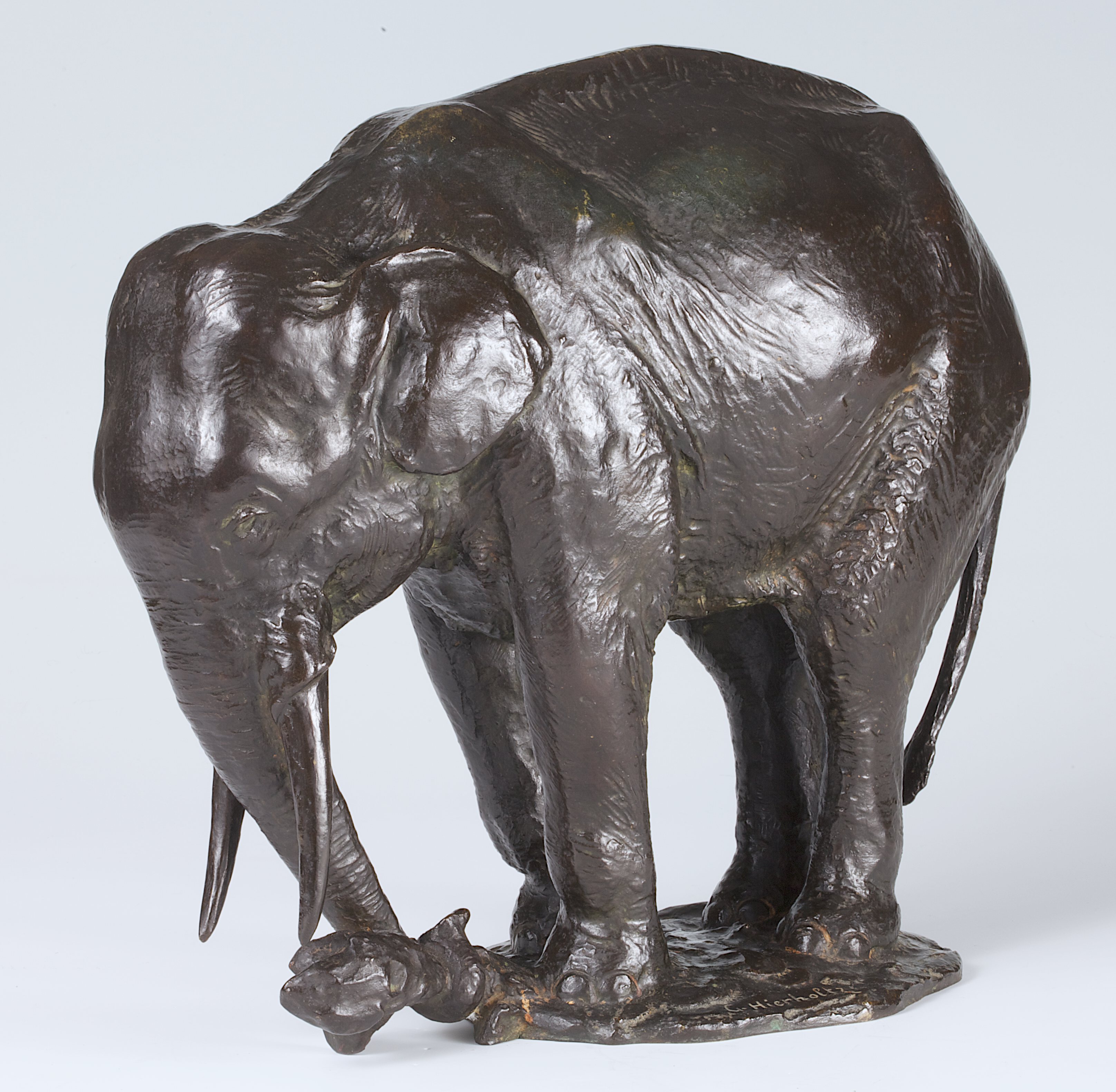
Gustave Hierholtz „Elephant uprooting a trunk“