
Journal
Latest Articles

MUNICH HIGHLIGHTS FAIR 2026: A DIALOGUE OF PAST AND PRESENT
For Munich Highlights 2026, Ralph Gierhards Antiques / Fine Art presents a selection shaped by the same principle that gives the fair its particular character: care. In the historic setting of the Munich Residenz, Munich Highlights has established itself as a boutique fair for collectors, connoisseurs and art professionals who value quality over volume. Its strength lies in the careful selection of objects, the personal expertise of its exhibitors, and the possibility of encountering works of art in an atmosphere that feels both intimate and exceptional.
This approach corresponds closely with the philosophy of Ralph Gierhards. The Düsseldorf gallery has cultivated a refined and personal eye for important works of art, furniture and decorative objects from the 16th to the early 20th century. Rather than presenting art as a sequence of categories, the gallery searches for objects that carry presence, craftsmanship, provenance and emotional resonance. Each piece is chosen for the clarity of its quality and for the conversation it can create with works from other periods and disciplines.
At this year’s fair, that conversation begins with animal sculpture. Ralph Gierhards presents a selection of works by Renée Sintenis, August Gaul and other internationally renowned animal sculptors of the early to mid-20th century. These bronzes speak with a quiet intensity. Sintenis’s antelope, conceived in 1954, captures the elegance and vulnerability of the animal in a gesture of inward movement. Gaul’s Hurrying Bear on Four Legs, created in 1914, offers another kind of vitality with its fully observed character. Together, such works reveal how animal sculpture became one of the most sensitive fields of modern artistic expression.
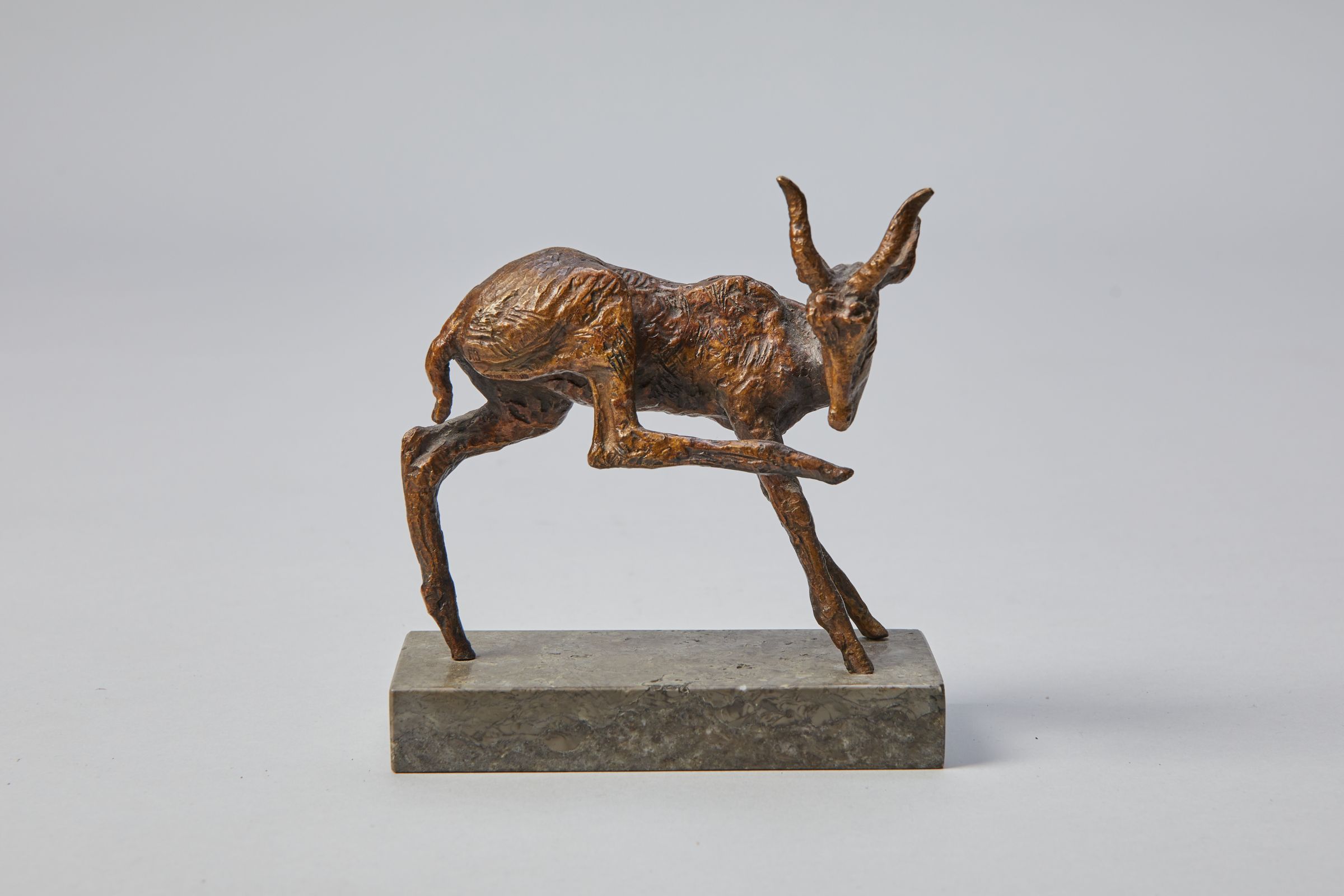 Renée Sintenis (1888 - 1965), “Antelope licking its right foot”, conceived 1954
Ralph Gierhards’ participation in Munich Highlights 2026 is therefore not only a presentation of individual works. It is an argument for selection itself. In a fair devoted to excellence, authenticity and encounter, the gallery contributes an exhibition shaped by long expertise, disciplined taste and a belief that the finest objects do not merely decorate a space. They define it.
This approach corresponds closely with the philosophy of Ralph Gierhards. The Düsseldorf gallery has cultivated a refined and personal eye for important works of art, furniture and decorative objects from the 16th to the early 20th century. Rather than presenting art as a sequence of categories, the gallery searches for objects that carry presence, craftsmanship, provenance and emotional resonance. Each piece is chosen for the clarity of its quality and for the conversation it can create with works from other periods and disciplines.
At this year’s fair, that conversation begins with animal sculpture. Ralph Gierhards presents a selection of works by Renée Sintenis, August Gaul and other internationally renowned animal sculptors of the early to mid-20th century. These bronzes speak with a quiet intensity. Sintenis’s antelope, conceived in 1954, captures the elegance and vulnerability of the animal in a gesture of inward movement. Gaul’s Hurrying Bear on Four Legs, created in 1914, offers another kind of vitality with its fully observed character. Together, such works reveal how animal sculpture became one of the most sensitive fields of modern artistic expression.
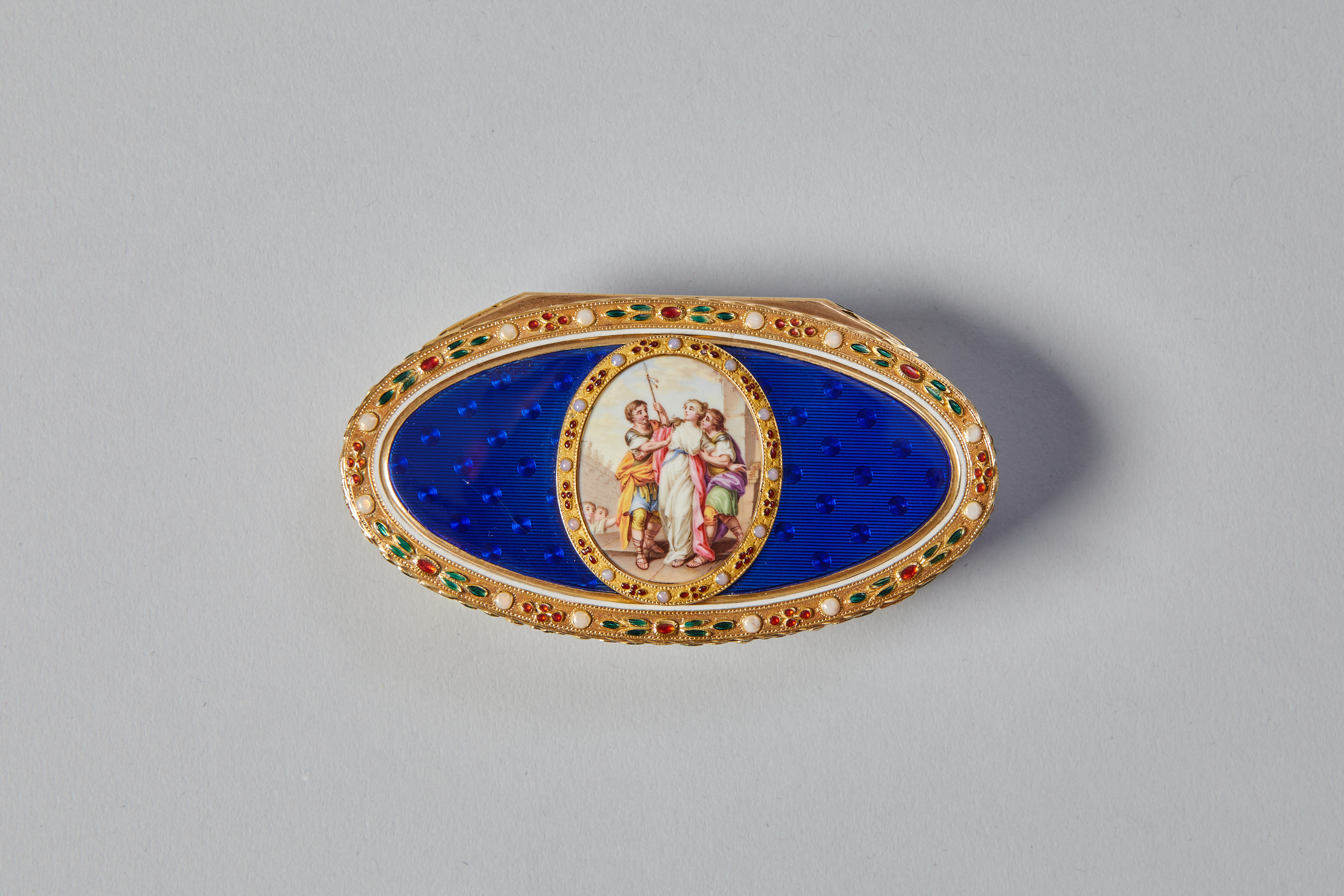
Renée Sintenis (1888 - 1965), “Antelope licking its right foot”, conceived 1954A second focus of the presentation lies in one of the gallery’s most distinctive areas of expertise, the 18th-century European gold boxes. These objects require a particular kind of connoisseurship, which we proudly carry at Ralph Gierhards Gallery. Their value is not only in precious material, but in proportion, enamel, construction, marks, attribution and the condition of surfaces made to be held closely in the hand. Among the Highlights is a rare blue enamelled and guilloché oval Hanau gold box, whose translucent midnight-blue enamel, and finely worked decorative structure demonstrate the refinement of 18th-century goldsmithing. For Ralph Gierhards, such pieces are not simply lavish objects. They are miniature architectures of taste, technique and social history.
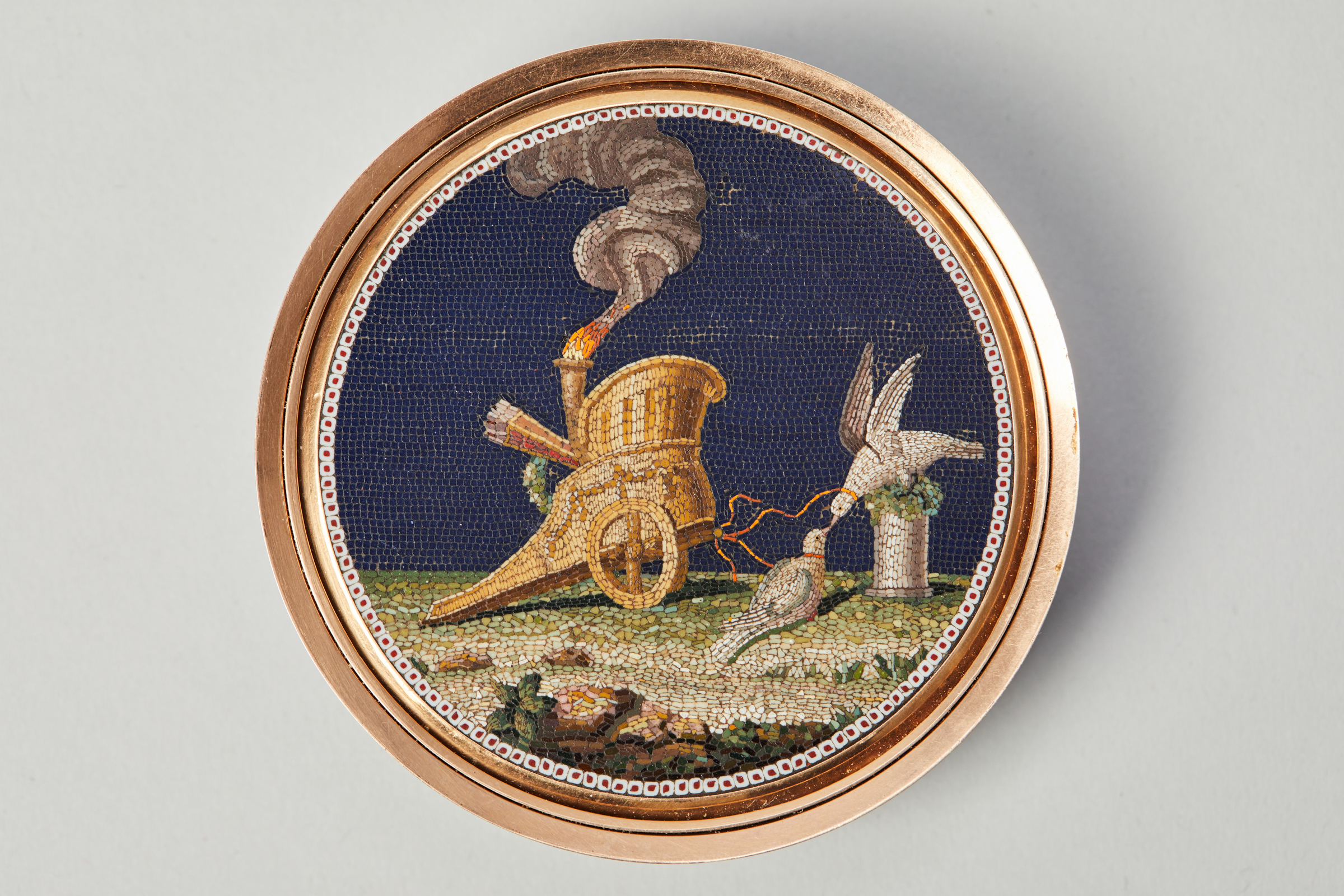
Alongside them, micromosaics from the first half of the 19th century continue the theme of minute precision. Like gold boxes, they reward slow looking. Their beauty lies in the relation between scale and ambition, with tiny fragments assembled into images of remarkable depth, colour and permanence. Within the setting of Munich Highlights, they form a natural counterpart to the gallery’s gold boxes, showing how small-format works can hold an extraordinary degree of artistry.For Munich Highlights 2026, Ralph Gierhards Antiques / Fine Art presents a selection shaped by the same principle that gives the fair its particular character: care. In the historic setting of the Munich Residenz, Munich Highlights has established itself as a boutique fair for collectors, connoisseurs and art professionals who value quality over volume. Its strength lies in the careful selection of objects, the personal expertise of its exhibitors, and the possibility of encountering works of art in an atmosphere that feels both intimate and exceptional.
This approach corresponds closely with the philosophy of Ralph Gierhards. The Düsseldorf gallery has cultivated a refined and personal eye for important works of art, furniture and decorative objects from the 16th to the early 20th century. Rather than presenting art as a sequence of categories, the gallery searches for objects that carry presence, craftsmanship, provenance and emotional resonance. Each piece is chosen for the clarity of its quality and for the conversation it can create with works from other periods and disciplines.
Alongside them, micromosaics from the first half of the 19th century continue the theme of minute precision. Like gold boxes, they reward slow looking. Their beauty lies in the relation between scale and ambition, with tiny fragments assembled into images of remarkable depth, colour and permanence. Within the setting of Munich Highlights, they form a natural counterpart to the gallery’s gold boxes, showing how small-format works can hold an extraordinary degree of artistry.For Munich Highlights 2026, Ralph Gierhards Antiques / Fine Art presents a selection shaped by the same principle that gives the fair its particular character: care. In the historic setting of the Munich Residenz, Munich Highlights has established itself as a boutique fair for collectors, connoisseurs and art professionals who value quality over volume. Its strength lies in the careful selection of objects, the personal expertise of its exhibitors, and the possibility of encountering works of art in an atmosphere that feels both intimate and exceptional.
This approach corresponds closely with the philosophy of Ralph Gierhards. The Düsseldorf gallery has cultivated a refined and personal eye for important works of art, furniture and decorative objects from the 16th to the early 20th century. Rather than presenting art as a sequence of categories, the gallery searches for objects that carry presence, craftsmanship, provenance and emotional resonance. Each piece is chosen for the clarity of its quality and for the conversation it can create with works from other periods and disciplines.
Workshop Giacomo Raffaelli (1753 - 1836), “Bonbonniere with Roman micromosaic”, ca. 1800
The exhibition is further enriched by 19th-century French and German paintings, as well as selected Old Master works. These paintings broaden the presentation without diluting it. They add historical depth and painterly atmosphere, allowing sculpture, decorative art and design to be seen not as isolated fields, but as parts of a continuous culture of collecting.
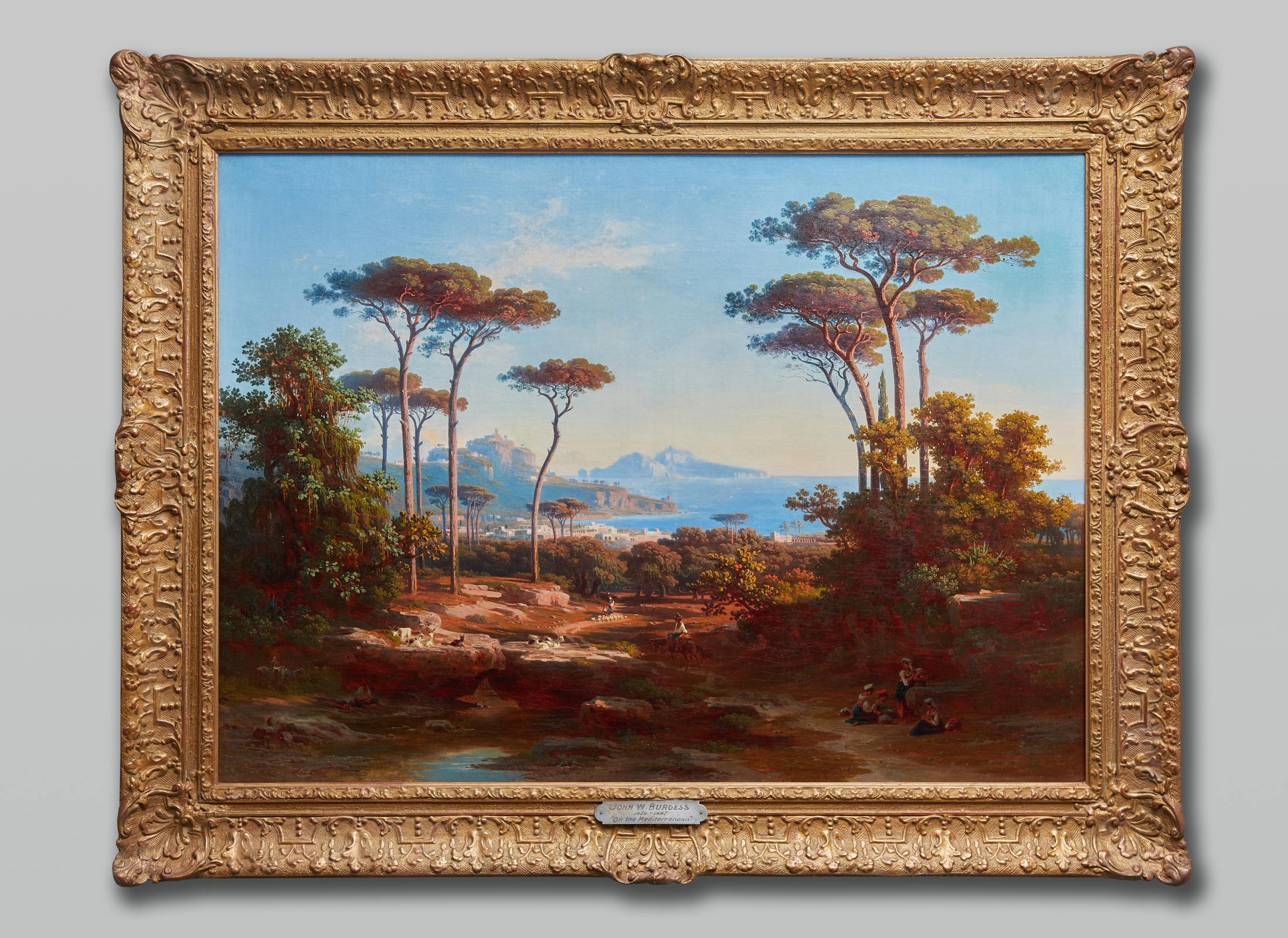
Johann J. Frey (1813 - 1865), “Atmospheric evening view from Massa Lubrense to Capri”, 1860
The Art Deco and design elements complete this sense of a lived and thoughtful interior. A pair of sheepskin-covered armchairs by the Danish designer Erling Torvits, circa 1950, introduces Scandinavian warmth and modern comfort, while a lambskin armchair by Mogens Lassen brings another note of sculptural softness. Nearby, an early scagliola panel, repurposed as a table on a modern base, creates a dialogue between historic craft and contemporary presentation. Its decorative surface and architectural presence embody exactly the kind of transformation that thoughtful collecting can make possible.
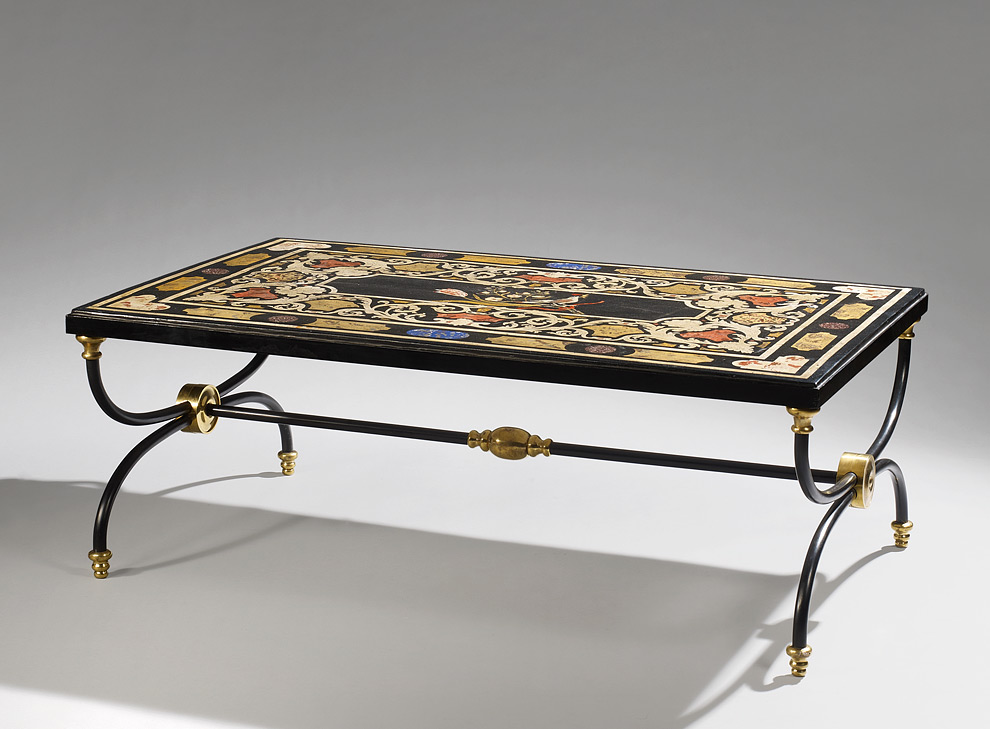
Italian Scagliola plate on a modern base, ca. 1750
Ralph Gierhards’ participation in Munich Highlights 2026 is therefore not only a presentation of individual works. It is an argument for selection itself. In a fair devoted to excellence, authenticity and encounter, the gallery contributes an exhibition shaped by long expertise, disciplined taste and a belief that the finest objects do not merely decorate a space. They define it.

DANIËL DE BLIECK: A WORK FROM OUR COLLECTION IN STADHUISMUSEUM ZIERIKZEE
Ralph Gierhards Antiques / Fine Art is pleased to announce the loan of a work from its collection to the forthcoming exhibition “Daniël de Blieck, een Zeeuwe meester uit de Gouden Eeuw” at the Stadhuis Museum Zierikzee in the Netherlands. The exhibition is scheduled to open on 1 July 2026 and will run until 15 November 2026.
The painting on loan, An Interior of a Church, was created by Daniël de Blieck between 1650 and 1652. Signed lower left “blieck”, the oil on panel measures 77.5 x 63 cm, or 94 x 78 cm framed. Its provenance includes a former private collection in Düsseldorf, the Kisters Collection in Kreuzlingen until 1970, and, from 1970 onwards, the Dr. Müller Collection in Cologne.
Daniël de Blieck was a Dutch Golden Age painter, draftsman and architect, best known for his architectural paintings. His work often explores church interiors, both real and imaginary, with a refined sense of space, perspective and atmosphere. In An Interior of a Church, architecture becomes more than setting: it creates rhythm, depth and contemplation, inviting the viewer into a carefully constructed world of light, proportion and silence.
We are honoured that this painting will form part of an exhibition dedicated to De Blieck’s artistic legacy and to the cultural richness of Zeeland during the Dutch Golden Age. For our gallery, loans of this kind are an important way of allowing works of art to enter into scholarly dialogue, public view and historical context.
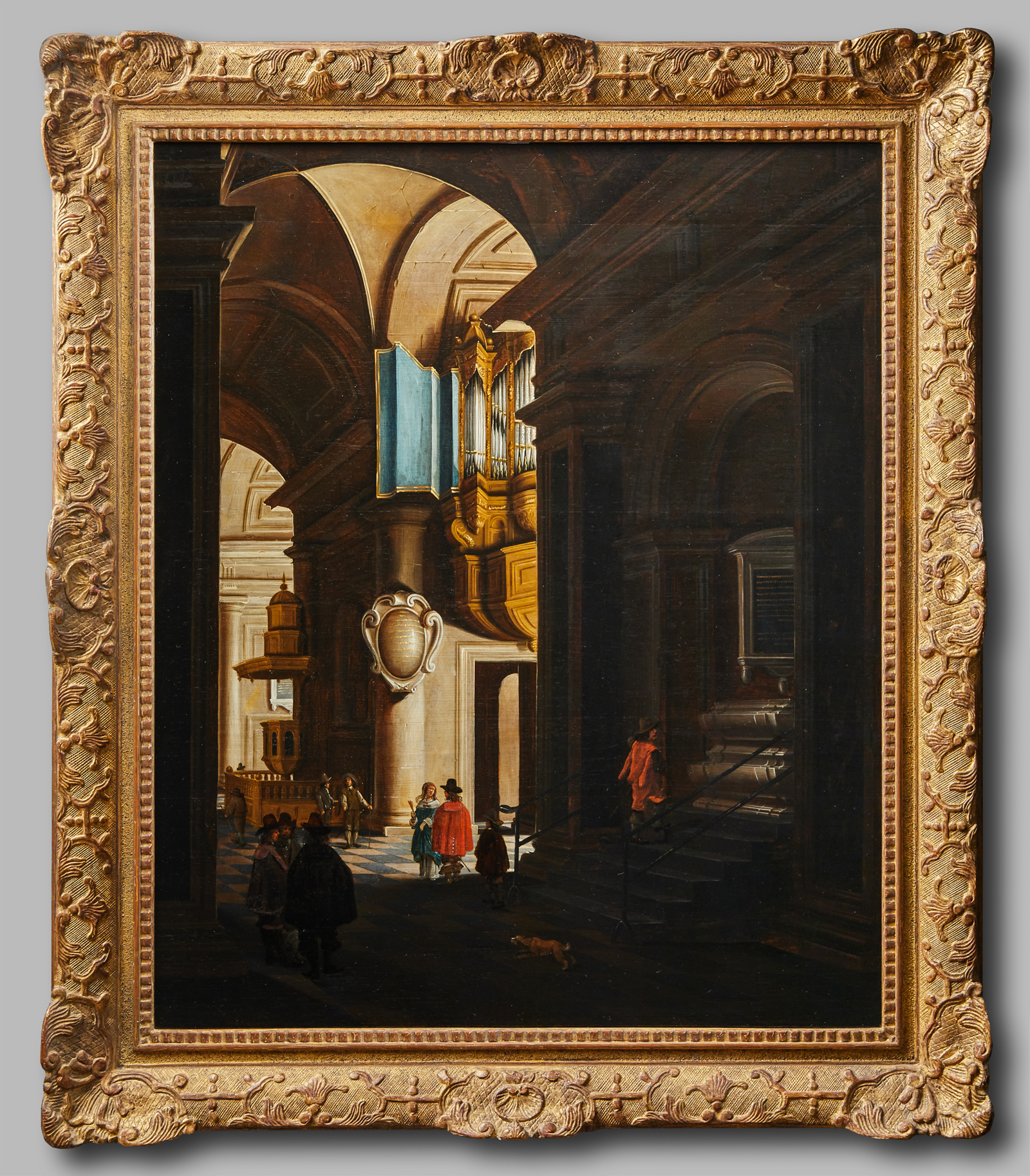
The painting on loan, An Interior of a Church, was created by Daniël de Blieck between 1650 and 1652. Signed lower left “blieck”, the oil on panel measures 77.5 x 63 cm, or 94 x 78 cm framed. Its provenance includes a former private collection in Düsseldorf, the Kisters Collection in Kreuzlingen until 1970, and, from 1970 onwards, the Dr. Müller Collection in Cologne.
Daniël de Blieck was a Dutch Golden Age painter, draftsman and architect, best known for his architectural paintings. His work often explores church interiors, both real and imaginary, with a refined sense of space, perspective and atmosphere. In An Interior of a Church, architecture becomes more than setting: it creates rhythm, depth and contemplation, inviting the viewer into a carefully constructed world of light, proportion and silence.
We are honoured that this painting will form part of an exhibition dedicated to De Blieck’s artistic legacy and to the cultural richness of Zeeland during the Dutch Golden Age. For our gallery, loans of this kind are an important way of allowing works of art to enter into scholarly dialogue, public view and historical context.
Daniël de Blieck (1627 - 1673 Middelburg) „A church interior“

WHY ANIMAL SCULPTURE STILL SHAPES OUR SPACES
Animal sculptures possess a particular allure that speaks directly to us. In the 19th and 20th centuries especially, artists studied animal anatomy with extraordinary discipline, translating observation into bronze and stone with remarkable sensitivity. These works represent art at its most direct, form reimagining motion, material capturing instinct. Few artistic genres command such immediate presence or such lasting visual authority. Within this period, animal sculpture reached a level of autonomy and refinement that continues to define sculpture collecting today.
Animals have long served as vehicles for expressing human emotion and experience. From prehistoric cave paintings to medieval carvings, they have embodied power, grace, fear, loyalty, and freedom. Yet it was in the late 19th and early 20th centuries that the animal became an independent sculptural subject. No longer just a decorative accessory, it stood complete in itself, studied, simplified, and elevated through modern sculptural language. Let’s dive into the artists that glorified animal sculptures for us.
RENÉE SINTENIS
Renée Sintenis approached animals with intimacy and psychological nuance. Her sculptures often focus on domestic or smaller creatures, rendered with alertness and quiet dignity. Rather than monumental drama, she favored clarity of line and presence. Her animals feel alive not because of theatrical movement, but because of restraint. In an interior setting, a Sintenis sculpture introduces elegance and subtle character, making it particularly desirable within a refined animal sculptures collection.
AUGUST GAUL
August Gaul pursued balance and structural clarity. His animals are reduced to essential forms without losing natural truth. The calm stance of a deer or the poised stillness of a bird becomes an exploration of mass and proportion. Gaul’s contribution to bronze animal sculptures lies in this equilibrium between realism and abstraction. His works sit effortlessly in both classical and contemporary spaces, embodying strength through simplicity.
EMY ROEDER
Emy Roeder brought expressive intensity to her sculptural practice. Even in animal subjects, one senses an underlying emotional charge. Her forms are compact, concentrated, and powerful. Roeder’s work demonstrates how animal sculpture in the 20th century could bridge human and animal sensibilities, creating objects that feel psychologically resonant rather than merely decorative.
MAXIMILIAN FIOT
Maximilian Fiot remained closer to naturalistic observation, capturing movement and vitality with refined detail. His sculptures reveal deep anatomical understanding, particularly in equestrian and wildlife subjects. For collectors seeking bronze animal sculptures that combine elegance with realism, Fiot represents a strong and historically grounded choice.
GEORGES LUCIEN GUYOT
Georges Lucien Guyot’s animal sculptures reflect careful study and compositional awareness. His works often emphasize gesture and posture, allowing the animal’s stance to communicate character. They function beautifully in garden settings as well as interior environments, bridging sculpture and landscape with quiet authority.
EDOUARD-MARCEL SANDOZ
Sandoz introduced stylization and decorative rhythm into animal sculpture. While rooted in observation, his forms often embrace a modern sensibility, emphasizing contour and surface. His bronze animal sculptures appeal strongly to collectors who appreciate both sculptural innovation and historical continuity.
JOSEF PALLENBERG
Josef Pallenberg’s dedication to anatomical accuracy and dynamic movement gave his works exceptional vitality. His studies of musculature and posture reveal an artist deeply engaged with zoological observation. These sculptures command attention without excess, making them powerful focal points in both traditional estates and modern architectural settings.
ROGER GODCHAUX
Roger Godchaux is particularly celebrated for his mastery in depicting animals in motion. His refined casting and sensitivity to proportion elevate his work within the tradition of French animalier sculpture. For collectors building a serious animal sculptures collection, Godchaux offers both technical excellence and historical significance.
FRANÇOIS POMPON
François Pompon “distilled” the animal form to its purest essence. His smooth, simplified surfaces and monumental calm transformed animal sculpture into something unmistakably modern. Pompon’s work demonstrates how reduction can intensify presence. A single sculpture can anchor an entire space through quiet strength alone.
The untamed beauty of a wild animal protecting its offspring once adorned parks and the grand halls of mansions, embodying continuity and power. Today, 19th and 20th century animal sculptures can be rediscovered with fresh appreciation. In a world dominated by abstraction and digital imagery, the sculpted animal reconnects us to instinct, physicality, and the continuity of life. These works bridge eras, from classical traditions to modernist refinement, while remaining deeply relevant.
Starting a focused collection of animal sculptures from this period is not simply about browsing animal sculptures for sale. It is about engaging with a defined artistic lineage. These works combine technical mastery, psychological subtlety, and sculptural independence. Whether placed in a garden, a library, or a contemporary living room, they introduce character and historical depth. Collecting 19th and 20th century animal sculpture is therefore more than an aesthetic decision. It is an investment in a tradition that unites craftsmanship, symbolism, and enduring presence, a tradition that continues to enrich both spaces and serious collectors alike.
Animals have long served as vehicles for expressing human emotion and experience. From prehistoric cave paintings to medieval carvings, they have embodied power, grace, fear, loyalty, and freedom. Yet it was in the late 19th and early 20th centuries that the animal became an independent sculptural subject. No longer just a decorative accessory, it stood complete in itself, studied, simplified, and elevated through modern sculptural language. Let’s dive into the artists that glorified animal sculptures for us.
RENÉE SINTENIS
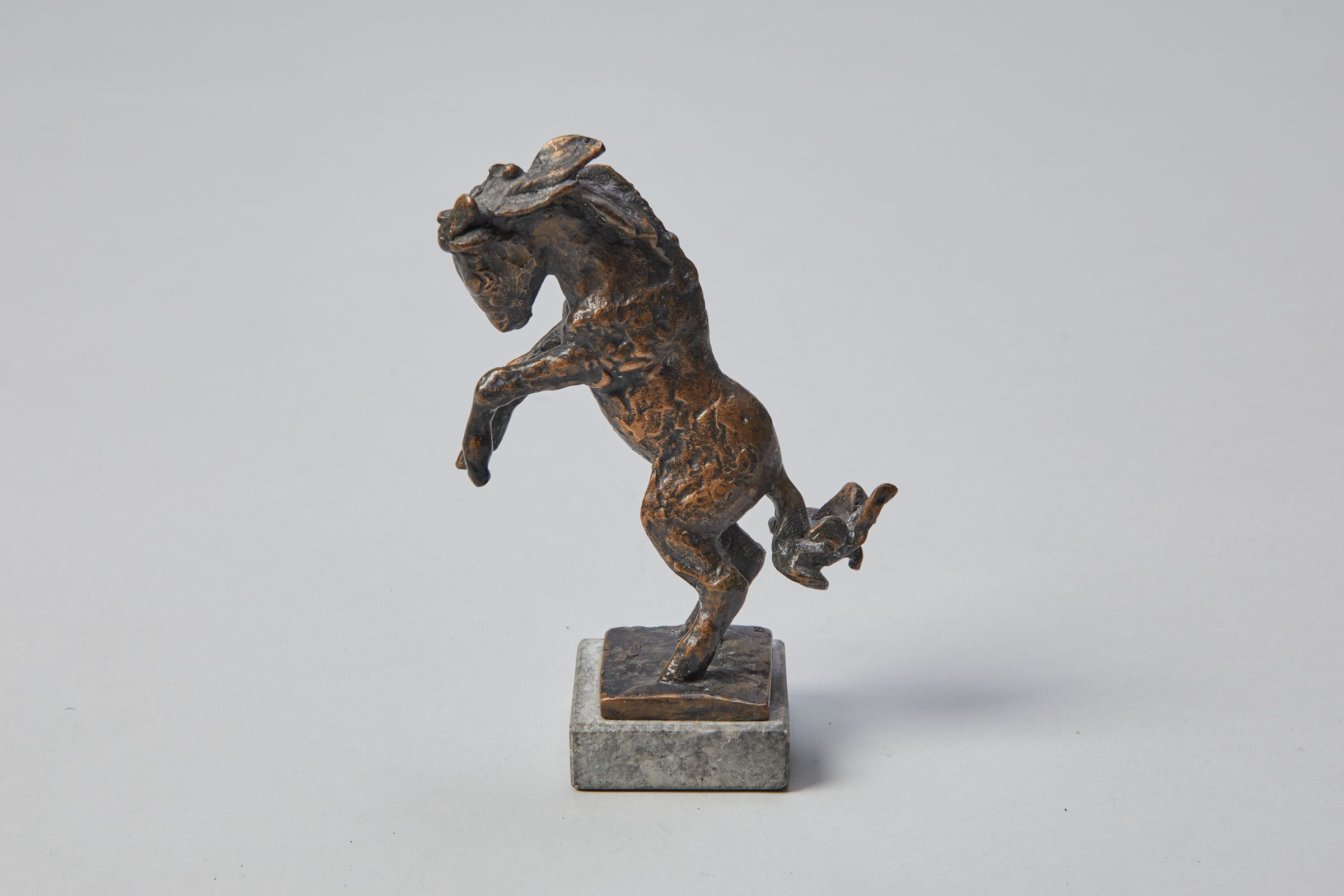
Renée Sintenis approached animals with intimacy and psychological nuance. Her sculptures often focus on domestic or smaller creatures, rendered with alertness and quiet dignity. Rather than monumental drama, she favored clarity of line and presence. Her animals feel alive not because of theatrical movement, but because of restraint. In an interior setting, a Sintenis sculpture introduces elegance and subtle character, making it particularly desirable within a refined animal sculptures collection.
Renée Sintenis „Pony rearing“
AUGUST GAUL
August Gaul pursued balance and structural clarity. His animals are reduced to essential forms without losing natural truth. The calm stance of a deer or the poised stillness of a bird becomes an exploration of mass and proportion. Gaul’s contribution to bronze animal sculptures lies in this equilibrium between realism and abstraction. His works sit effortlessly in both classical and contemporary spaces, embodying strength through simplicity.
EMY ROEDER
Emy Roeder brought expressive intensity to her sculptural practice. Even in animal subjects, one senses an underlying emotional charge. Her forms are compact, concentrated, and powerful. Roeder’s work demonstrates how animal sculpture in the 20th century could bridge human and animal sensibilities, creating objects that feel psychologically resonant rather than merely decorative.
MAXIMILIAN FIOT
Maximilian Fiot remained closer to naturalistic observation, capturing movement and vitality with refined detail. His sculptures reveal deep anatomical understanding, particularly in equestrian and wildlife subjects. For collectors seeking bronze animal sculptures that combine elegance with realism, Fiot represents a strong and historically grounded choice.
GEORGES LUCIEN GUYOT
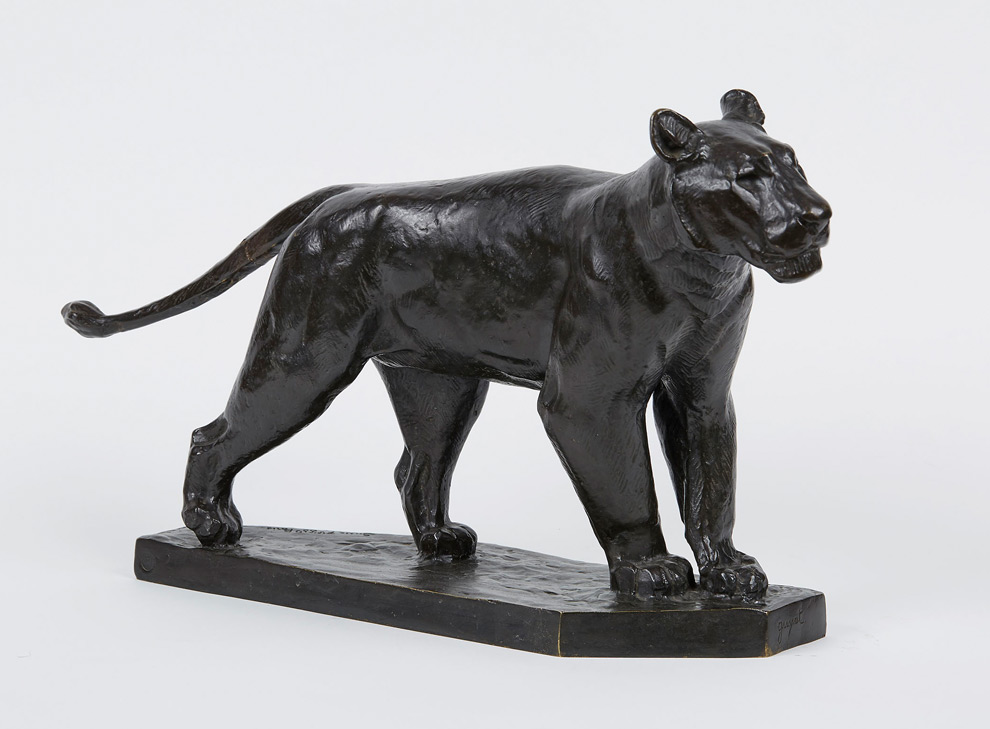
Georges Lucien Guyot’s animal sculptures reflect careful study and compositional awareness. His works often emphasize gesture and posture, allowing the animal’s stance to communicate character. They function beautifully in garden settings as well as interior environments, bridging sculpture and landscape with quiet authority.
Georges L. Guyot „Lioness on the hunt“
EDOUARD-MARCEL SANDOZ
Sandoz introduced stylization and decorative rhythm into animal sculpture. While rooted in observation, his forms often embrace a modern sensibility, emphasizing contour and surface. His bronze animal sculptures appeal strongly to collectors who appreciate both sculptural innovation and historical continuity.
JOSEF PALLENBERG
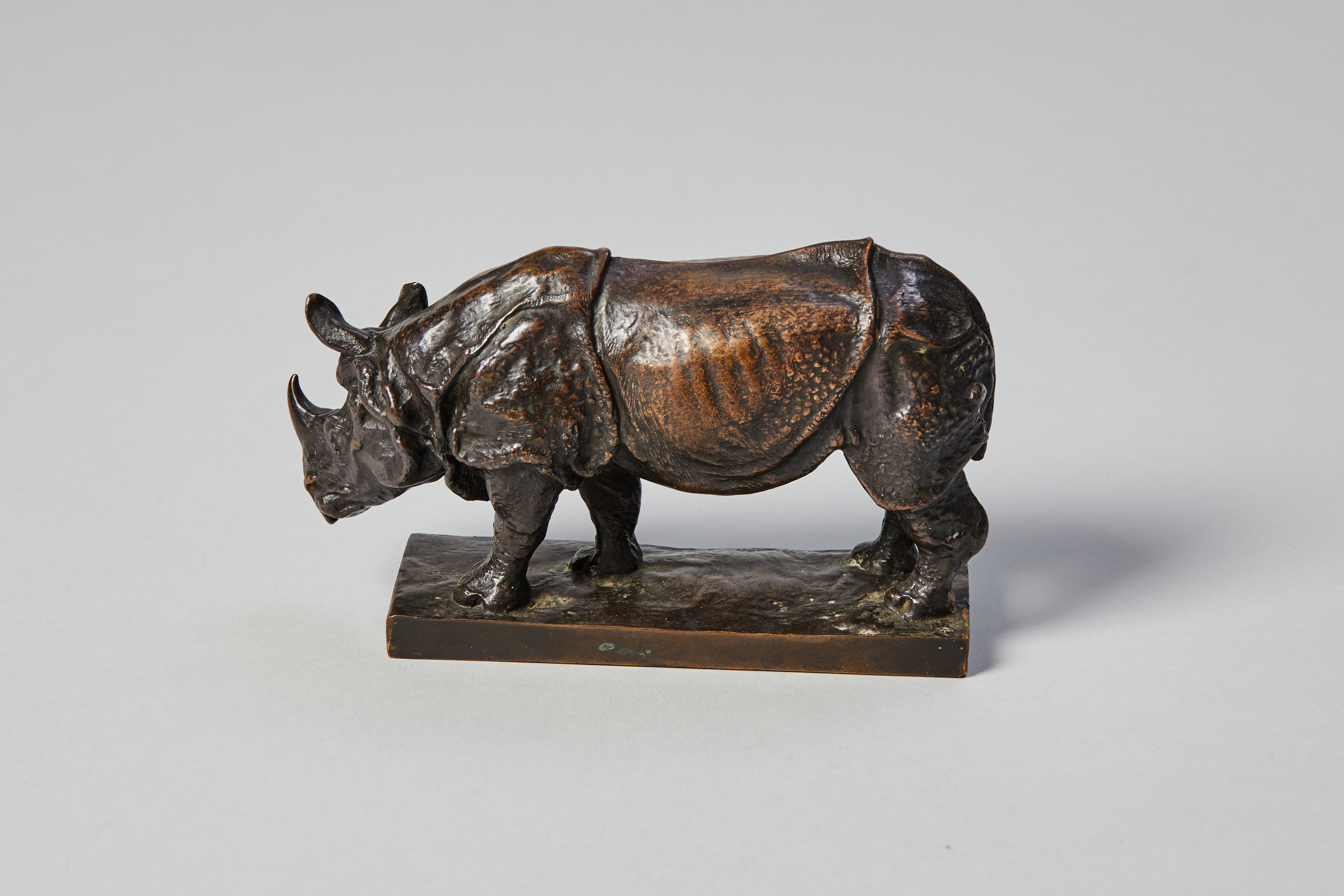
Josef Pallenberg’s dedication to anatomical accuracy and dynamic movement gave his works exceptional vitality. His studies of musculature and posture reveal an artist deeply engaged with zoological observation. These sculptures command attention without excess, making them powerful focal points in both traditional estates and modern architectural settings.
Josef Pallenberg „Standing rhinoceros“
ROGER GODCHAUX
Roger Godchaux is particularly celebrated for his mastery in depicting animals in motion. His refined casting and sensitivity to proportion elevate his work within the tradition of French animalier sculpture. For collectors building a serious animal sculptures collection, Godchaux offers both technical excellence and historical significance.
FRANÇOIS POMPON
François Pompon “distilled” the animal form to its purest essence. His smooth, simplified surfaces and monumental calm transformed animal sculpture into something unmistakably modern. Pompon’s work demonstrates how reduction can intensify presence. A single sculpture can anchor an entire space through quiet strength alone.
The untamed beauty of a wild animal protecting its offspring once adorned parks and the grand halls of mansions, embodying continuity and power. Today, 19th and 20th century animal sculptures can be rediscovered with fresh appreciation. In a world dominated by abstraction and digital imagery, the sculpted animal reconnects us to instinct, physicality, and the continuity of life. These works bridge eras, from classical traditions to modernist refinement, while remaining deeply relevant.
Starting a focused collection of animal sculptures from this period is not simply about browsing animal sculptures for sale. It is about engaging with a defined artistic lineage. These works combine technical mastery, psychological subtlety, and sculptural independence. Whether placed in a garden, a library, or a contemporary living room, they introduce character and historical depth. Collecting 19th and 20th century animal sculpture is therefore more than an aesthetic decision. It is an investment in a tradition that unites craftsmanship, symbolism, and enduring presence, a tradition that continues to enrich both spaces and serious collectors alike.
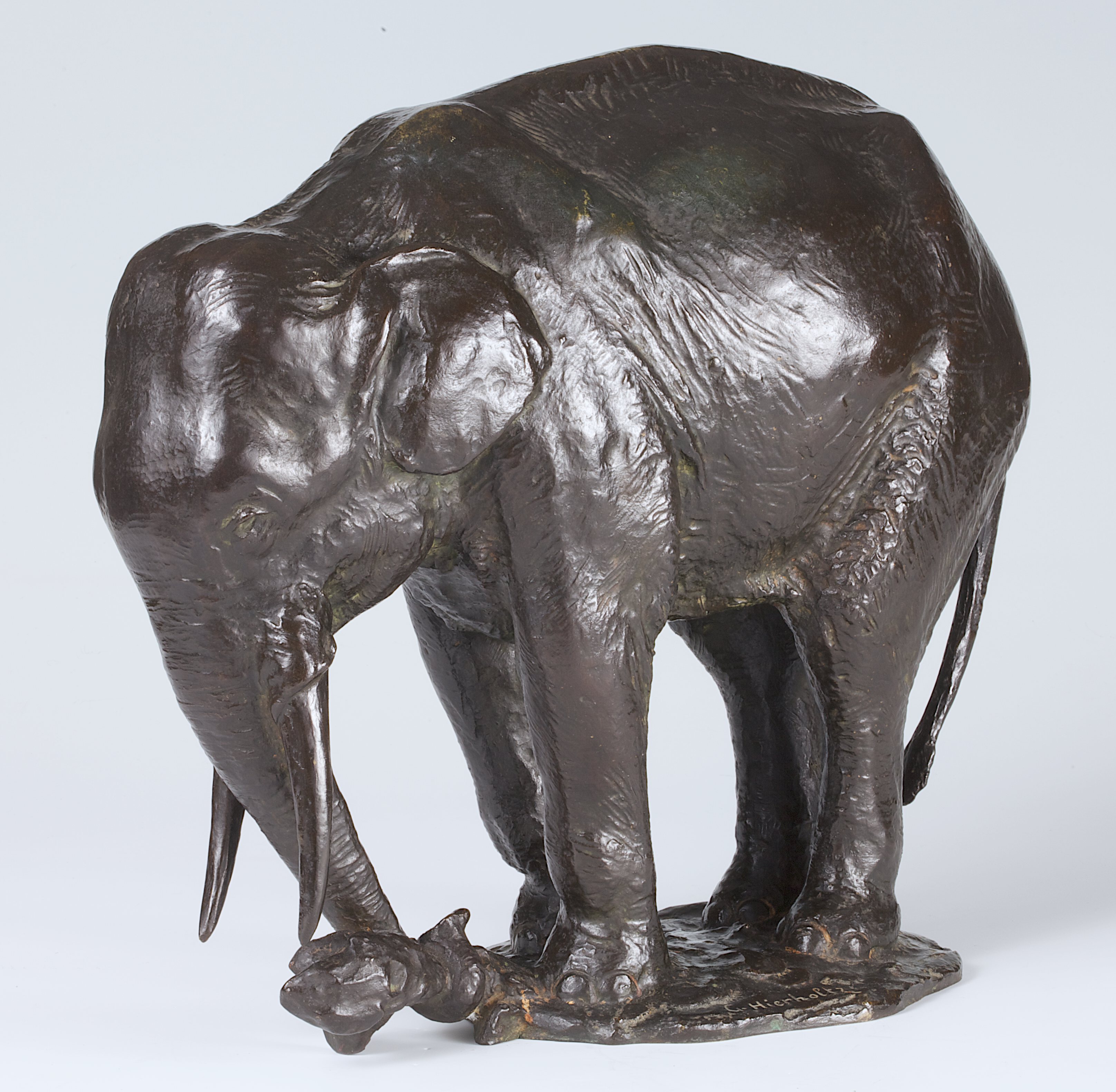
Gustave Hierholtz „Elephant uprooting a trunk“

ANTIQUE GOLD SNUFF BOXES IN A WORLD OF DIGITAL LUXURY
In a world shaped by algorithms, artificial intelligence, and automation, objects from another time feel like absolute luxury. The level of craftsmanship mastered during the 18th and 19th century reflects a depth of practice that continues to astonish us today. This mastery, refined through years of patient labor and inherited knowledge, cannot be reproduced or simulated. It belongs to another time. All that remains for us is to observe it, to preserve it, and to admire it deeply.
Antique gold snuff boxes occupy a unique place within this context. Whether French snuff boxes, richly decorated tabatière, or finely worked antique enamel boxes, they stand as reminders of a world in which luxury was defined by human touch rather than speed. Below, we explore why antique snuff boxes are not only objects to collect, but objects to experience. This reflection is written for those who seek not simply to own, but to engage deeply with what they collect.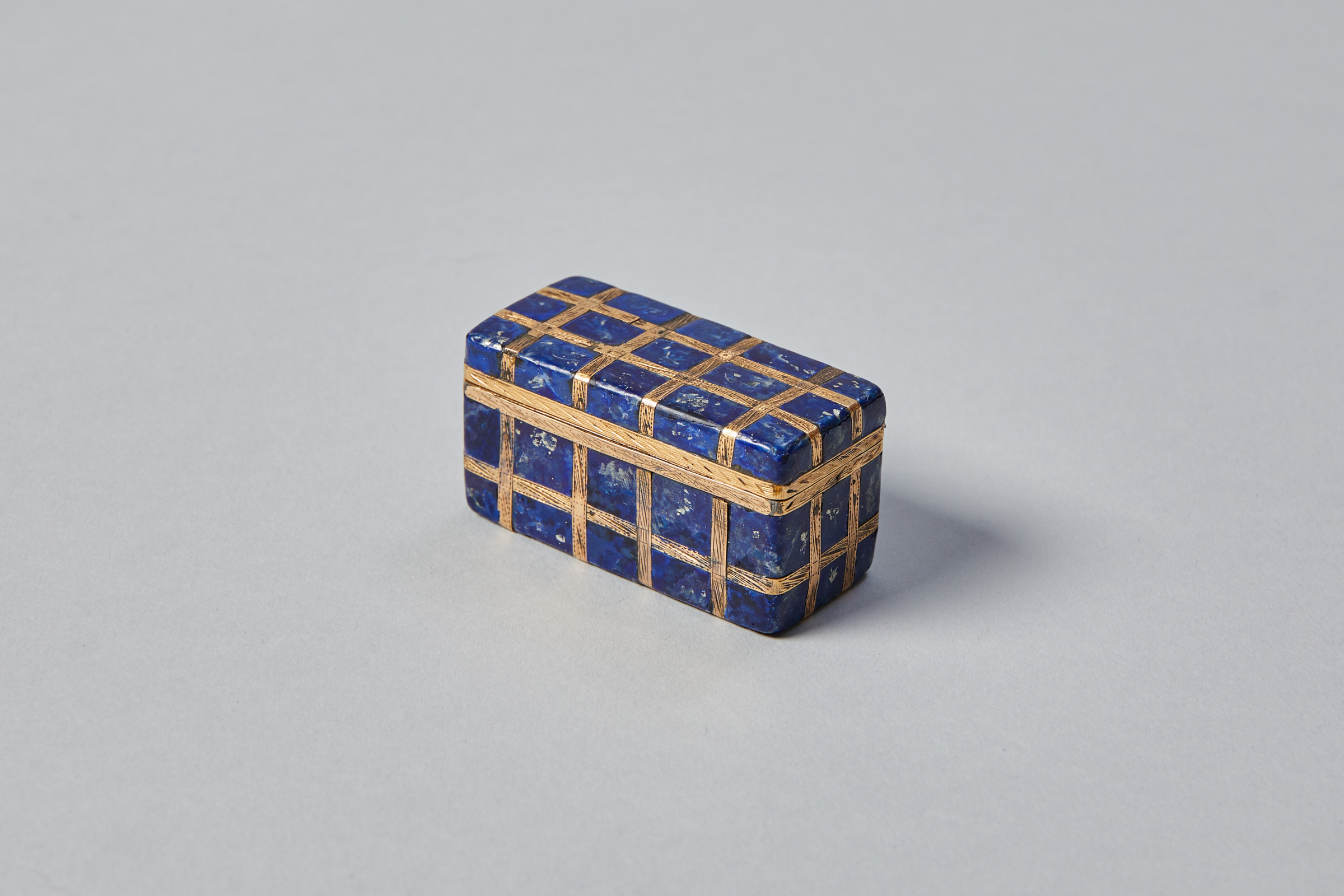 A gold and blue lacquer snuff box, Paris ca. 1766
ENJOYING GOLD SNUFF BOXES CAN BECOME A FORM OF MINDFULNESS
Observation is a practice often associated with simplicity: the flame of a candle, the movement of leaves, the repetition of breath. Now imagine an object that invites even deeper attention. Antique gold boxes, engraved, enameled, painted, and sometimes set with stones, reveal more the longer one looks. Patterns emerge slowly. A unique item in the day, that rewards patience with more details. This sustained act of looking anchors the mind in the present moment and reconnects the observer with a slower rhythm of time.
THEY ENCOURAGE TACTILE ENGAGEMENT IN A DIGITAL AGE
Unlike digital luxury, antique boxes are meant to be handled. Their weight, temperature, and balance are part of their identity. Opening and closing a snuff box is a deliberate gesture, refined through centuries of social ritual. This physical interaction grounds the collector in the real world, offering a contrast to the frictionless experiences of screens and interfaces. Antique gold snuff boxes remind us that luxury once involved touch, care, and intentional movement.
THEY INVITE PERSONAL RITUALS BEYOND THEIR ORIGINAL USE
While originally designed to hold snuff, many collectors today repurpose antique gold boxes in subtle, personal ways. Some use them to keep handwritten notes, jewellery, or small sweets. Others reserve them for moments of pause, removing them from a drawer simply to contemplate their surfaces. In this way, antique boxes are not just collectables, but living objects that adapt to contemporary life while retaining their historical soul.
THEY OFFER A PRIVATE FORM OF ENJOYMENT
Unlike large artworks displayed for public viewing, snuff boxes are intimate, often shared only when chosen. This privacy gives them a rare emotional quality. Whether acquired through antique boxes for sale or inherited across generations, these objects become companions rather than statements. The collector’s relationship with them deepens quietly, away from trends and public validation.
THEY CULTIVATE HISTORICAL IMAGINATION
Each box carries traces of its era, like the signature of the artist, or the portrayal of an old occasion. French snuff boxes, for instance, often reflect the elegance and refinement of the classical French culture. Studying antique gold boxes sharpens historical sensitivity through context, allowing collectors to move mentally between centuries through a single object held in the hand.
THEY BALANCE PERMANENCE WITH PORTABILITY
In a time when luxury often demands scale and visibility, snuff boxes offer a different proposition. Their small size allows them to be stored, preserved, and revisited with ease. Yet their value, both artistic and emotional, is anything but small. This balance makes antique boxes for sale especially appealing to collectors seeking depth.
In a world increasingly defined by speed and abstraction, Antique Gold Snuff Boxes stand as quiet affirmations of human creativity. They slow us down, sharpen our senses, and remind us that true luxury is not measured by novelty, but by meaning.
Antique gold snuff boxes occupy a unique place within this context. Whether French snuff boxes, richly decorated tabatière, or finely worked antique enamel boxes, they stand as reminders of a world in which luxury was defined by human touch rather than speed. Below, we explore why antique snuff boxes are not only objects to collect, but objects to experience. This reflection is written for those who seek not simply to own, but to engage deeply with what they collect.
A gold and blue lacquer snuff box, Paris ca. 1766ENJOYING GOLD SNUFF BOXES CAN BECOME A FORM OF MINDFULNESS
Observation is a practice often associated with simplicity: the flame of a candle, the movement of leaves, the repetition of breath. Now imagine an object that invites even deeper attention. Antique gold boxes, engraved, enameled, painted, and sometimes set with stones, reveal more the longer one looks. Patterns emerge slowly. A unique item in the day, that rewards patience with more details. This sustained act of looking anchors the mind in the present moment and reconnects the observer with a slower rhythm of time.
THEY ENCOURAGE TACTILE ENGAGEMENT IN A DIGITAL AGE
Unlike digital luxury, antique boxes are meant to be handled. Their weight, temperature, and balance are part of their identity. Opening and closing a snuff box is a deliberate gesture, refined through centuries of social ritual. This physical interaction grounds the collector in the real world, offering a contrast to the frictionless experiences of screens and interfaces. Antique gold snuff boxes remind us that luxury once involved touch, care, and intentional movement.
THEY INVITE PERSONAL RITUALS BEYOND THEIR ORIGINAL USE
While originally designed to hold snuff, many collectors today repurpose antique gold boxes in subtle, personal ways. Some use them to keep handwritten notes, jewellery, or small sweets. Others reserve them for moments of pause, removing them from a drawer simply to contemplate their surfaces. In this way, antique boxes are not just collectables, but living objects that adapt to contemporary life while retaining their historical soul.
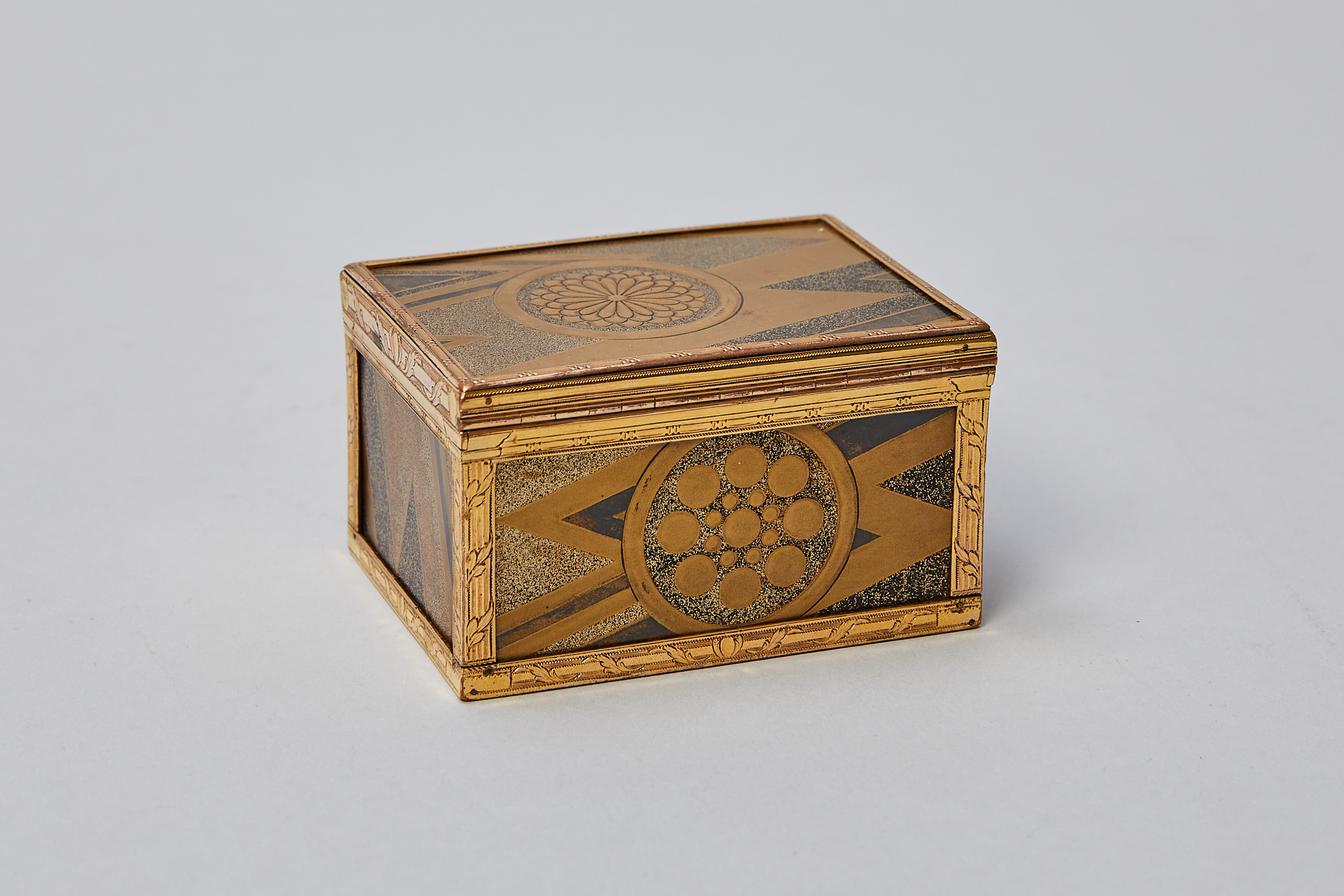
A black lacquer snuff box with gold painting, France ca. 1765
THEY OFFER A PRIVATE FORM OF ENJOYMENT
Unlike large artworks displayed for public viewing, snuff boxes are intimate, often shared only when chosen. This privacy gives them a rare emotional quality. Whether acquired through antique boxes for sale or inherited across generations, these objects become companions rather than statements. The collector’s relationship with them deepens quietly, away from trends and public validation.
THEY CULTIVATE HISTORICAL IMAGINATION
Each box carries traces of its era, like the signature of the artist, or the portrayal of an old occasion. French snuff boxes, for instance, often reflect the elegance and refinement of the classical French culture. Studying antique gold boxes sharpens historical sensitivity through context, allowing collectors to move mentally between centuries through a single object held in the hand.
THEY BALANCE PERMANENCE WITH PORTABILITY
In a time when luxury often demands scale and visibility, snuff boxes offer a different proposition. Their small size allows them to be stored, preserved, and revisited with ease. Yet their value, both artistic and emotional, is anything but small. This balance makes antique boxes for sale especially appealing to collectors seeking depth.
In a world increasingly defined by speed and abstraction, Antique Gold Snuff Boxes stand as quiet affirmations of human creativity. They slow us down, sharpen our senses, and remind us that true luxury is not measured by novelty, but by meaning.

WHY THE SMARTEST COLLECTORS ARE TURNING TO ANTIQUE GOLD SNUFF BOXES
Art collecting may appear romantic and instinctive, but lasting collections are built through discipline, foresight, organization, and a thoughtful understanding of one’s priorities. While love for art is essential, it is rarely sufficient on its own. Over time, experienced collectors learn that thoughtful decisions, fulfillment, and planning are what allow a collection to grow coherently and meaningfully.
As private sellers specializing in antique gold snuff boxes, our experience allows us to reflect on why collecting tabatières is not only romantic, but also a particularly intelligent choice within the broader landscape of art collecting.
BEING A SMART COLLECTOR REQUIRES BRILLIANCE
Seasoned collectors favor objects that endure daily life, occupy minimal space, and embody concentrated craftsmanship, historical depth, and material presence.
This type of comfort is one of the reasons why antique gold snuff boxes are rarely a collector’s first acquisition. They tend to appear later in a collecting journey, when experience begins to guide enthusiasm. At that stage, collectors are often looking for objects that allow their collection to grow without demanding constant compromises.
BEING A SMART COLLECTOR REQUIRES PLANNING
Knowing what kind of art one loves is often closely connected to knowing what kind of art one can realistically collect. Planning plays a central role here.
Collectors interested in art as a long-term commitment, often find themselves constrained by physical realities. Large-scale works, furniture, or fragile objects can impose limitations that shape future choices. Antique gold snuff boxes offer a clear alternative. Their size, durability, and portability make them easy to store, preserve, and integrate into an existing collection without logistical difficulty.
BEING A SMART COLLECTOR SHOWS KNOWLEDGE, NOT ACCORDANCE TO HYPE
Seasoned collectors are rarely driven by trends. Whether collecting for pleasure or with an eye toward long-term value, they tend to focus on substance rather than popularity. In the case of antique gold snuff boxes, value is defined by a combination of factors that reward knowledge and careful study.
Craftsmanship plays a central role, and learning to recognize quality is an expertise in itself. Provenance, condition, period, the identity of the maker, and the level of technical mastery all contribute to the significance of a piece. No single characteristic stands alone. Instead, it is the balance between these elements that determines the true value of a box. We all love an antique enamel box, but getting to know all about it makes it even better.
BEING A SMART COLLECTOR MEANS DOMINATING A SMALL PORTION OF THE ART WORLD
A limited availability is often perceived as a weakness, but in reality it can be a strength. Antique gold snuff boxes belong to a specialized field defined by scarcity and historical specificity. The level of craftsmanship found in 18th and 19th century gold boxes reflects a cultural and technical tradition that can no longer be replicated.
Opportunities to acquire exceptional pieces are rare. Auctions are competitive, and specialized private sellers are few. For collectors, this means that knowledge and patience matter more than speed or volume.
BEING A SMART COLLECTOR MEANS UNDERSTANDING CONDITION
Unlike many other collectible objects, antique gold snuff boxes are often found in remarkably good condition. Their original use as snuff containers, bonbon holders, or small jewelry boxes meant they were handled with care and safely preserved. This has contributed to their survival over centuries.
Condition remains a decisive factor in both value and enjoyment. The quality of the gold, the resilience of enamel work, and the durability of semi-precious or precious stones have allowed many boxes to remain intact and visually striking. For collectors, this consistency offers reassurance and enhances the pleasure of close inspection and daily appreciation.
If one wishes not only to own collectible objects but to truly enjoy them, antique gold snuff boxes offer a rare balance. They are intimate, historically rich, and visually compelling, while remaining practical to collect and preserve. For us, these qualities explain why we have chosen to focus on these small masterpieces and why we are proud to work as sellers within this field.
For those interested in acquiring antique gold snuff boxes, we invite you to reach out and begin a conversation, in order to explore our golden boxes for sale.
As private sellers specializing in antique gold snuff boxes, our experience allows us to reflect on why collecting tabatières is not only romantic, but also a particularly intelligent choice within the broader landscape of art collecting.
Goldbonbonniere, Geneva ca. 1790
BEING A SMART COLLECTOR REQUIRES BRILLIANCE
Seasoned collectors favor objects that endure daily life, occupy minimal space, and embody concentrated craftsmanship, historical depth, and material presence.
This type of comfort is one of the reasons why antique gold snuff boxes are rarely a collector’s first acquisition. They tend to appear later in a collecting journey, when experience begins to guide enthusiasm. At that stage, collectors are often looking for objects that allow their collection to grow without demanding constant compromises.
BEING A SMART COLLECTOR REQUIRES PLANNING
Knowing what kind of art one loves is often closely connected to knowing what kind of art one can realistically collect. Planning plays a central role here.
Collectors interested in art as a long-term commitment, often find themselves constrained by physical realities. Large-scale works, furniture, or fragile objects can impose limitations that shape future choices. Antique gold snuff boxes offer a clear alternative. Their size, durability, and portability make them easy to store, preserve, and integrate into an existing collection without logistical difficulty.
A gold and enamel snuff box, Berlin ca. 1795
BEING A SMART COLLECTOR SHOWS KNOWLEDGE, NOT ACCORDANCE TO HYPE
Seasoned collectors are rarely driven by trends. Whether collecting for pleasure or with an eye toward long-term value, they tend to focus on substance rather than popularity. In the case of antique gold snuff boxes, value is defined by a combination of factors that reward knowledge and careful study.
Craftsmanship plays a central role, and learning to recognize quality is an expertise in itself. Provenance, condition, period, the identity of the maker, and the level of technical mastery all contribute to the significance of a piece. No single characteristic stands alone. Instead, it is the balance between these elements that determines the true value of a box. We all love an antique enamel box, but getting to know all about it makes it even better.
BEING A SMART COLLECTOR MEANS DOMINATING A SMALL PORTION OF THE ART WORLD
A limited availability is often perceived as a weakness, but in reality it can be a strength. Antique gold snuff boxes belong to a specialized field defined by scarcity and historical specificity. The level of craftsmanship found in 18th and 19th century gold boxes reflects a cultural and technical tradition that can no longer be replicated.
Opportunities to acquire exceptional pieces are rare. Auctions are competitive, and specialized private sellers are few. For collectors, this means that knowledge and patience matter more than speed or volume.
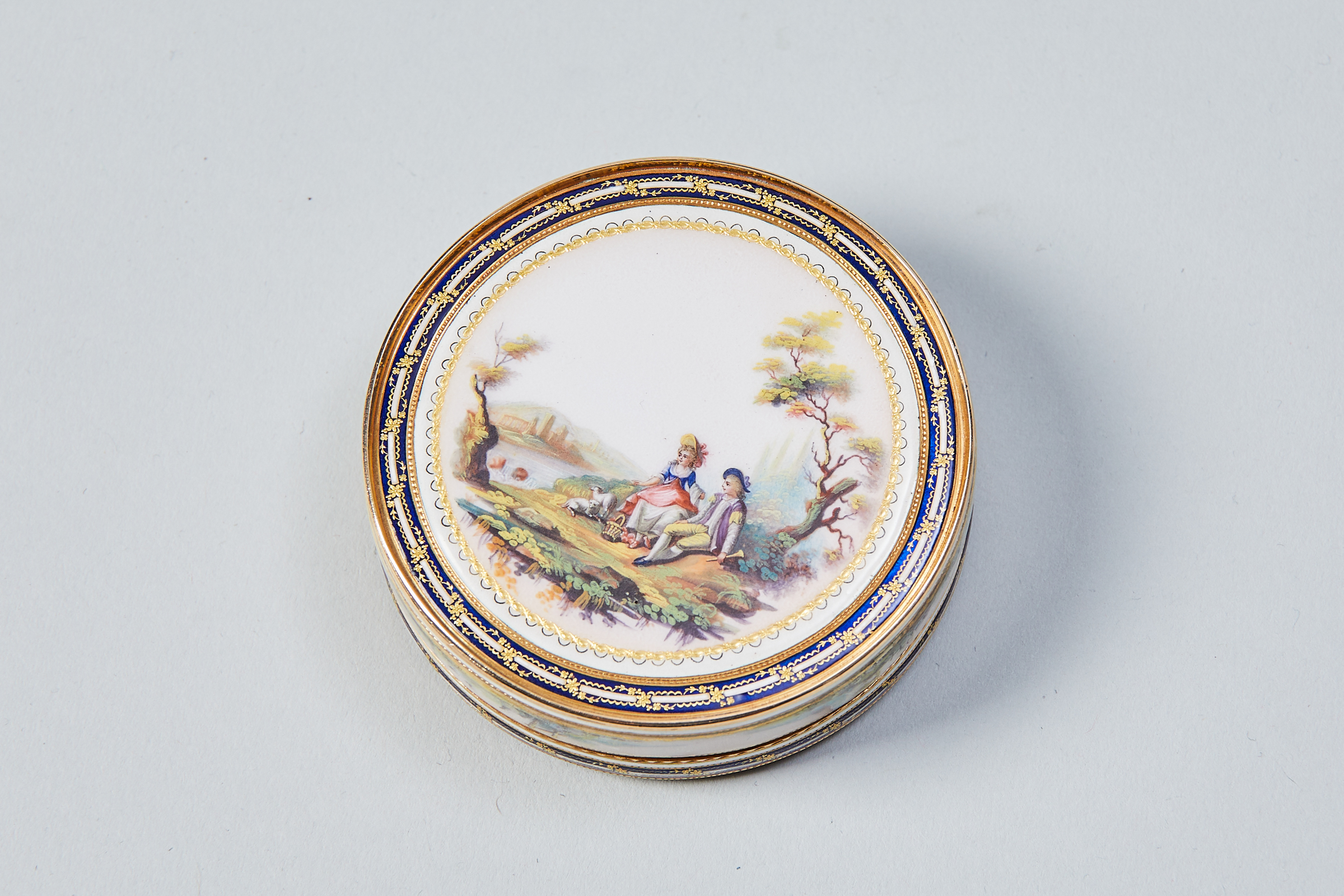
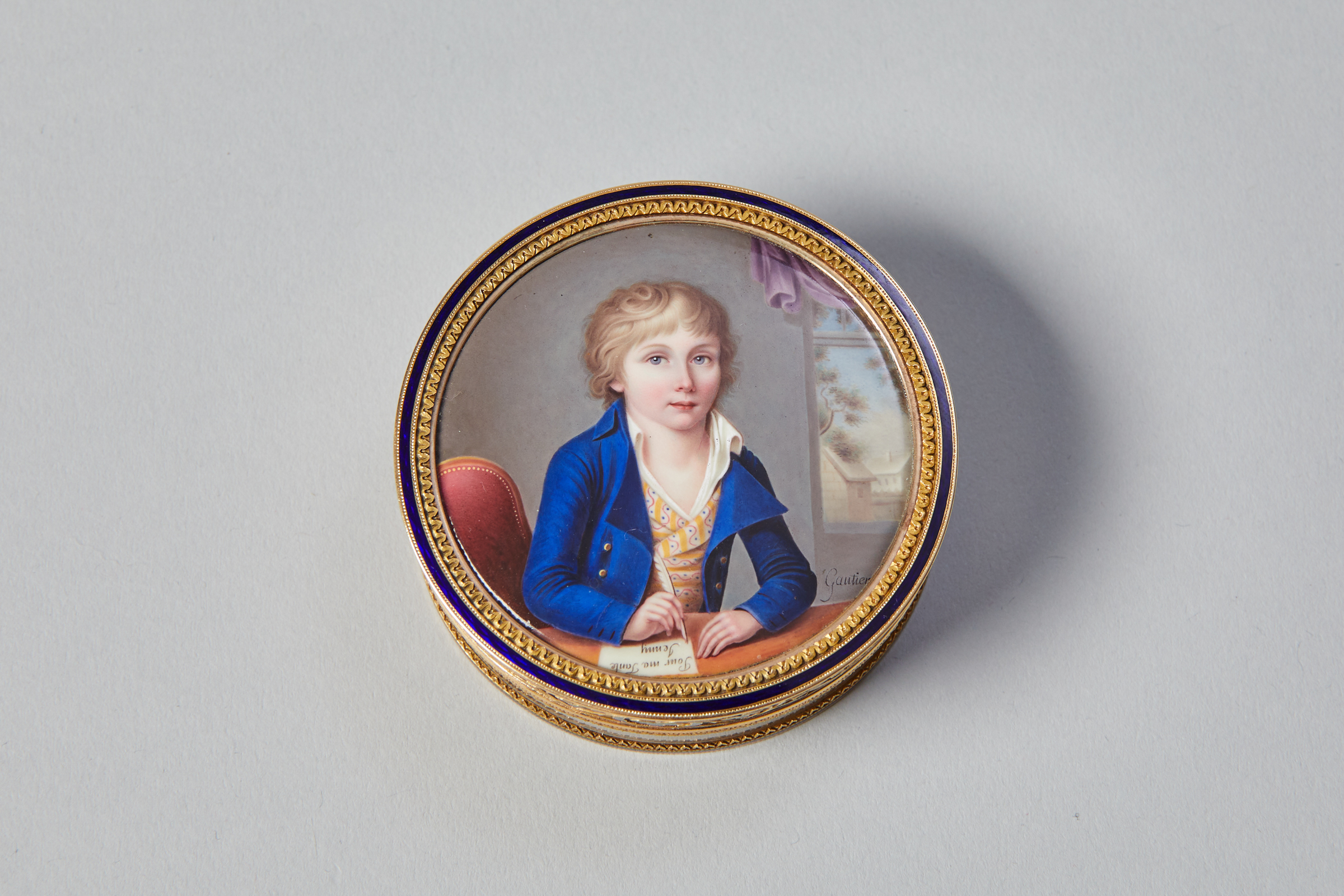
Glass bonbonniere in an enamelled gold setting with a detailed signed enamel portrait, Paris 1798 - 1809
BEING A SMART COLLECTOR MEANS UNDERSTANDING CONDITION
Unlike many other collectible objects, antique gold snuff boxes are often found in remarkably good condition. Their original use as snuff containers, bonbon holders, or small jewelry boxes meant they were handled with care and safely preserved. This has contributed to their survival over centuries.
Condition remains a decisive factor in both value and enjoyment. The quality of the gold, the resilience of enamel work, and the durability of semi-precious or precious stones have allowed many boxes to remain intact and visually striking. For collectors, this consistency offers reassurance and enhances the pleasure of close inspection and daily appreciation.
If one wishes not only to own collectible objects but to truly enjoy them, antique gold snuff boxes offer a rare balance. They are intimate, historically rich, and visually compelling, while remaining practical to collect and preserve. For us, these qualities explain why we have chosen to focus on these small masterpieces and why we are proud to work as sellers within this field.
For those interested in acquiring antique gold snuff boxes, we invite you to reach out and begin a conversation, in order to explore our golden boxes for sale.